


Making espresso at home can be a rewarding experience. Manual espresso machines give you full control over the brewing process, which lets you adjust the pressure and timing to suit your taste. Unlike automatic machines, they require more skill but often produce a richer, more personalized cup of coffee.
Manual machines typically include a lever that you pull to force hot water through the coffee grounds. This hands-on method can feel more engaging for coffee lovers who enjoy crafting each shot with care. They often have fewer parts to break and can last a long time when properly maintained.
When choosing a manual espresso machine, there are key factors to consider. The build quality and materials matter because they affect durability and heat retention. You’ll want a machine that’s easy to use and clean since manual machines involve more effort than automatic ones. Also, consider the size and style to fit your kitchen space.
We tested several manual espresso machines to find the ones that balance ease of use, durability, and the quality of espresso they produce.
Best Manual Espresso Machines for Home
We have tested and reviewed a variety of manual espresso machines to find the best options for home use. Our list focuses on machines that offer good control, durability, and quality espresso. These picks are great for anyone who enjoys making coffee by hand.
CASABREWS Espresso Machine
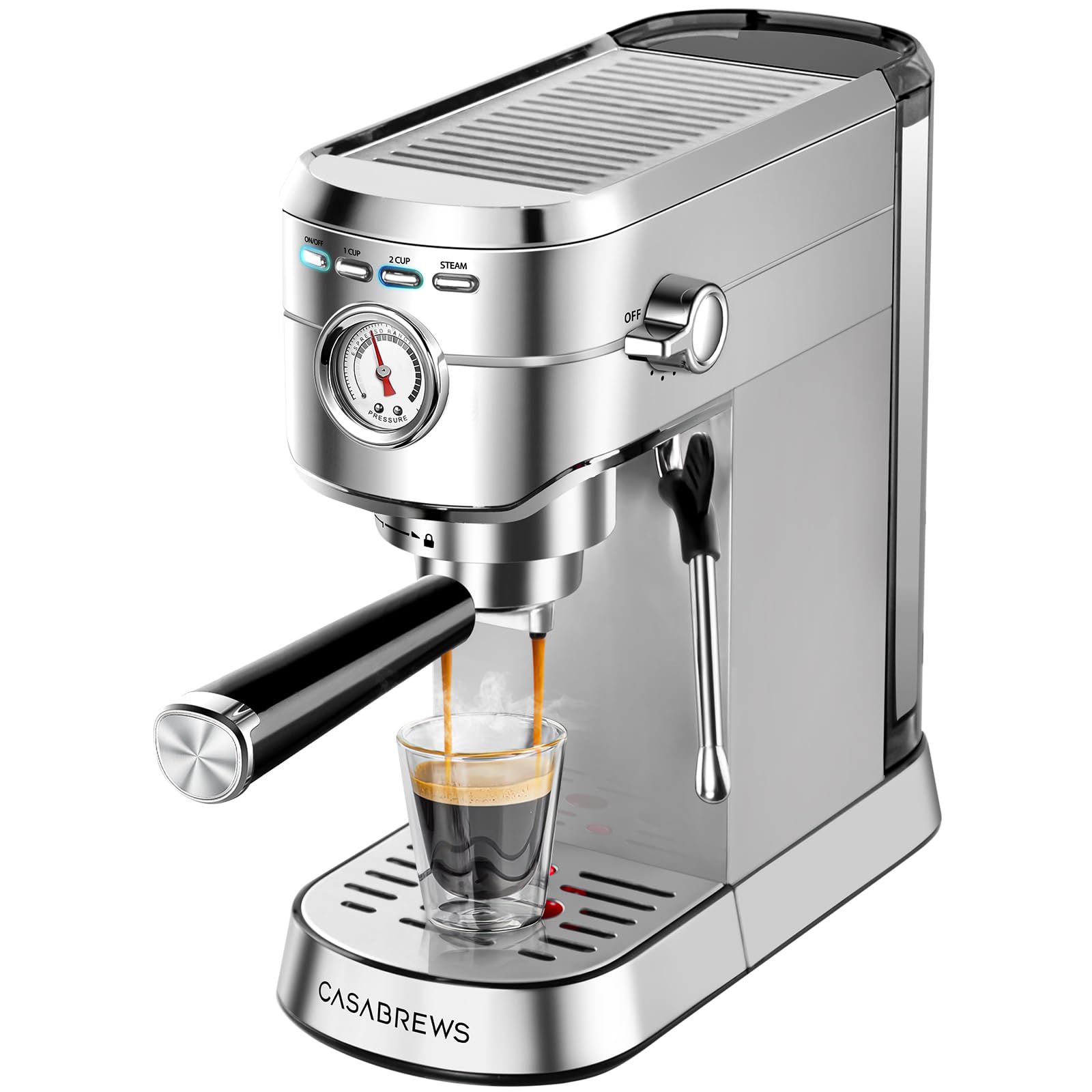
This machine is a good choice for anyone who wants a solid manual espresso maker with a milk frother that fits well in small spaces.
Pros
- Extracts rich espresso with a strong 20 bar pump
- Compact design that looks good and saves space
- Powerful milk frother for creamy foam and latte art
Cons
- Needs cooling down between milk frothing and brewing
- Hot water function can be slow and tricky
- Portafilter is pressurized, limiting some coffee ground options
Using the CASABREWS felt straightforward. We liked how quickly it heated up, letting us pull shots with a nice crema. The stainless steel finish gave it a sturdy feel and it didn’t take much room on the counter.
The milk frother is strong and made creamy foam that improved our cappuccinos. It took a little practice to get the steam wand right, but it was fun to try making latte art at home.
One downside is the machine needs a cool-down break after steaming milk before pulling espresso again. That slowed our workflow a bit. Also, the hot water feature took longer than expected. Overall, it’s a dependable machine for home or office use if you prefer manual control.
Atatix Espresso Machine
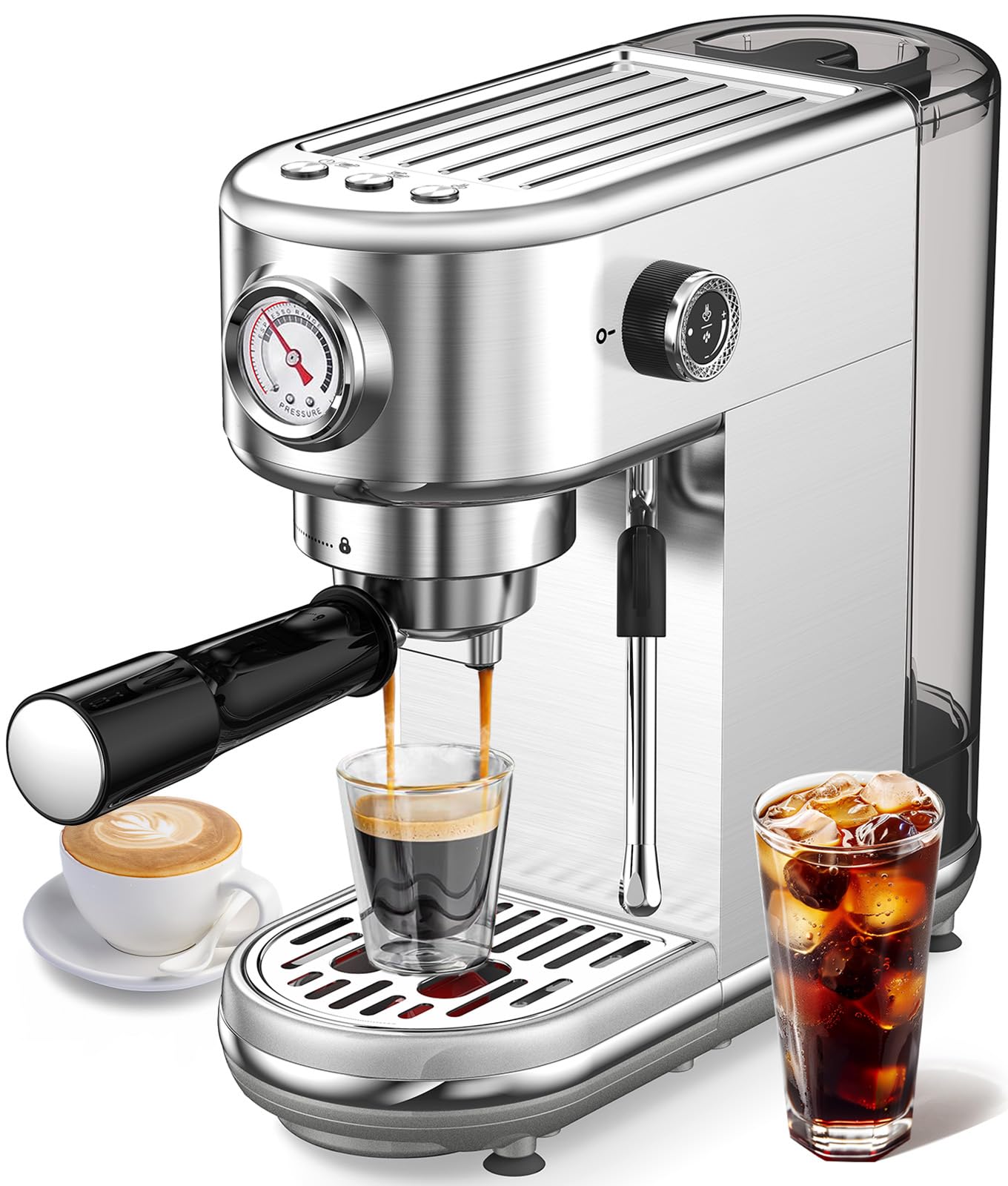
This espresso machine delivers café-quality coffee with easy-to-use features and a powerful steam wand for milk frothing.
Pros
- Brews smooth espresso with rich crema
- Strong 20-bar pressure for great extraction
- Easy to clean with detachable parts
Cons
- Manual extraction can take some practice
- Milk frother steam wand needs careful handling
- Slightly bulky for very small kitchens
We found that the Atatix machine consistently produces a nice espresso shot. The pressure system works well, giving the coffee a balanced and aromatic taste that feels like it came from a coffee shop.
Using the milk frother was fun and improved our lattes and cappuccinos. The micro-foam texture enhances the drinks, though it takes a bit of skill to get it perfect every time.
Cleaning is straightforward thanks to the removable water tank and drip tray. The sturdy build with stainless steel parts also adds a sleek look to the kitchen counter without being too large.
Flair NEO Flex

The Flair NEO Flex is a solid choice for those who want hands-on control and café-quality espresso without needing an electric machine.
Pros
- Great control over pressure and extraction
- Comes with two different portafilters for flexibility
- Easy to clean with removable parts
Cons
- Takes practice to get shots right
- Pressure gauge can be hard to read sometimes
- Requires a good burr grinder for best results
Using the Flair NEO Flex gave us a real sense of making espresso with our own hands. The lever system lets us control how much pressure we apply, which made each shot taste unique. The option to switch between a simple flow control portafilter and a more advanced bottomless one helped us improve our technique over time.
It’s compact and lightweight, making it easy to take outside or store in a small kitchen. Cleaning didn’t slow us down since the brewing head can pop right off for a quick rinse. Just adding boiled water and coffee grounds made the process feel fresh and rewarding.
The main tricky part is dialing in the grind and pressure for perfect results. The pressure gauge is helpful but can sometimes feel a bit off in placement. Still, once we got the hang of it, the rich crema and flavor notes far surpassed simpler manual machines we’ve tried before.
Imusa Espresso Maker
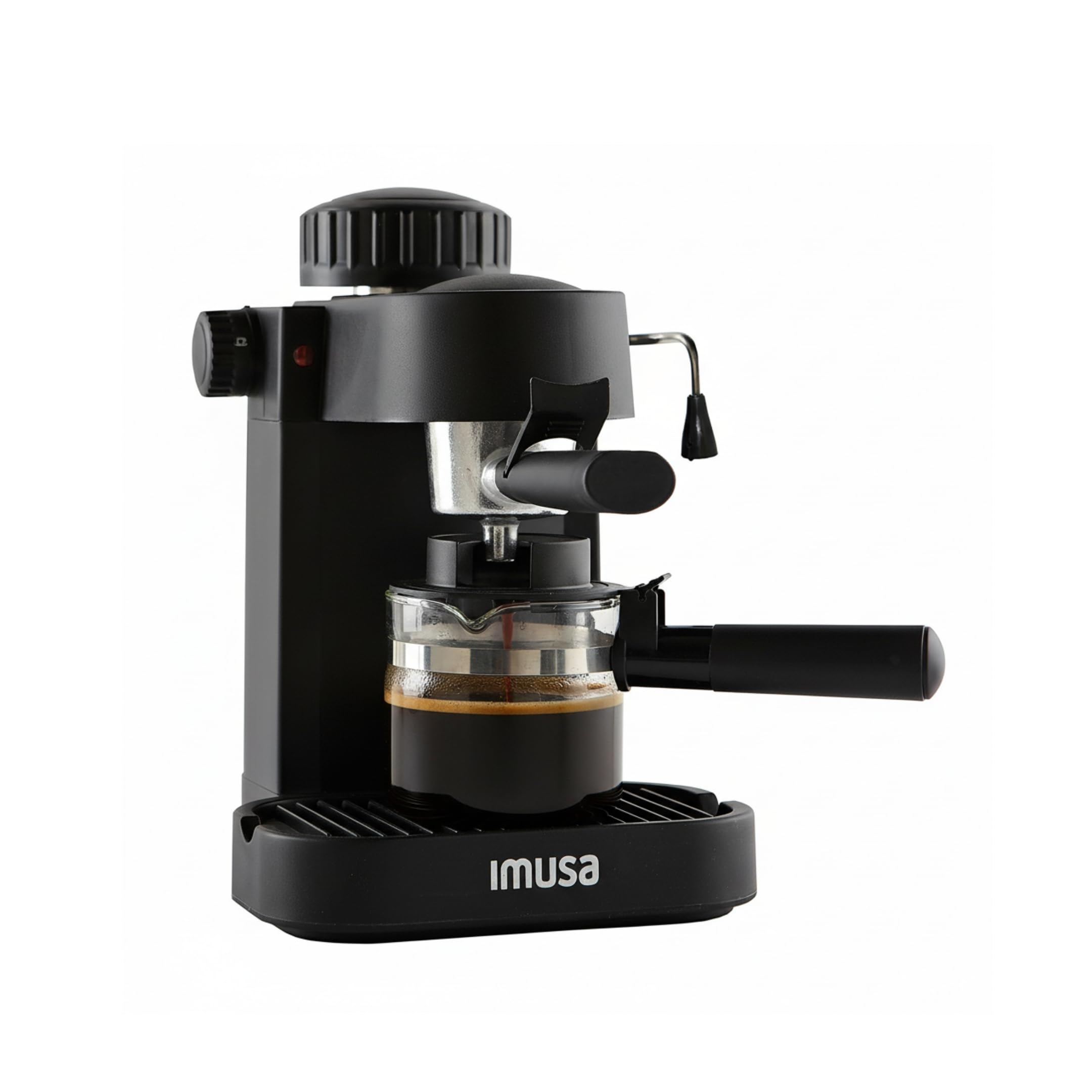
We find this espresso machine a solid choice for anyone who wants simple, fresh espresso and cappuccino at home without fuss.
Pros
- Brews up to four espresso cups at once
- Easy to clean with removable drip tray
- Milk frother works well for creamy drinks
Cons
- Plastic exterior feels less durable
- Limited water tank size requires frequent refills
- No advanced settings or temperature control
It’s quick to get a fresh shot of espresso with this machine. The setup is straightforward, and the removable filter basket makes cleaning easier than expected. We liked that it can handle four cups in one go, which suits a small group nicely.
The milk frother stands out for a simple device. It creates nice, creamy foam that blends well into cappuccinos or lattes. The machine’s size fits well on a countertop if you don’t want a bulky appliance stealing space.
While the plastic exterior doesn’t feel very tough, the overall build is decent for the price. It doesn’t have fancy settings or options, but if you want straightforward espresso and a good froth without a steep learning curve, this works well.
Breville Barista Express

We find the Breville Barista Express a solid choice for those wanting fresh espresso with built-in grinder control and easy steam wand use.
Pros
- Built-in grinder delivers fresh grounds every time
- Precise temperature and pressure for balanced espresso
- Steam wand lets us create good milk texture for lattes
Cons
- Learning curve to dial in grind and tamp pressure
- Takes some counter space with its larger footprint
- Steam wand can be a bit tricky to clean
The Barista Express feels well made with a brushed stainless steel finish that looks sharp in our kitchen. Grinding beans fresh is simple, and adjusting grind size helps us tailor shots to our taste. We like how it lets us watch the process up close and tweak things manually.
Pulling a shot under a minute is doable once you get used to it, thanks to the dose control grinder and PID temperature control. The steam wand is powerful and creates a nice microfoam, though it took some practice to get it right without splashing.
This machine suits anyone who wants more control over espresso making at home without jumping fully into manual lever machines. It’s a nice step up for espresso lovers who want fresh grind and good milk texture in one unit.
De’Longhi Stilosa Manual Espresso Machine

If you want a solid entry-level manual espresso machine that delivers reliable shots and a good milk froth, the Stilosa is worth considering.
Pros
- Reliable 15-bar pump for consistent espresso extraction
- Durable stainless steel boiler built to last
- Easy to use manual milk frother for creamy lattes and cappuccinos
Cons
- Takes some practice to get tamping and frothing right
- Smaller water tank means more frequent refills
- Limited temperature control options
We found the Stilosa easy to set up and straightforward to use after a few tries. The pressure from the pump produces espresso with a nice crema, which makes a difference if you’re serious about taste.
The built-in milk frother worked well but needs some effort to get the texture you want. It’s perfect for lattes and cappuccinos if you enjoy the hands-on process of steaming your own milk.
Its compact design fits nicely on the kitchen counter without crowding the space. Cleaning is simple, which is a big help if you want to keep your machine in good shape long term. Overall, this machine balances affordability and quality for anyone starting home espresso.
CASABREWS 3700 Essential Espresso Machine

This espresso machine delivers solid coffee performance and frothing power, making it a reliable choice for home use.
Pros
- Powerful 20-bar pump for rich espresso extraction
- Creamy milk frother that creates nice micro-foam
- Compact design with a large, removable water tank
Cons
- Takes some practice to master the milk frothing
- Tall design may not fit under all kitchen cabinets
- Some users report a learning curve with the first use cycle
We found the CASABREWS 3700 easy to use once we got the hang of the setup. The powerful pump really brings out the coffee’s aroma, giving a robust flavor in each shot. The stainless steel finish looks good on the counter and feels sturdy.
The steam wand lets us make smooth micro-foam, perfect for lattes and cappuccinos. It took a few tries to get the milk texture right, but after practicing, the foam was consistently creamy. The water tank holds enough to brew several cups before needing a refill, which is convenient.
Cleaning is straightforward since the drip tray and water tank are removable. The machine’s height is something to check if you have limited space, but overall it fits well in a small kitchen or office. We think this is a good option for espresso lovers who want quality and value at home.
Flair Classic Espresso Maker

We recommend the Flair Classic if you want full control over your espresso with a machine that’s portable and built to last.
Pros
- Precise pressure control for better shots
- Detachable parts make cleaning quick
- Solid, durable design with a great warranty
Cons
- Takes time to learn the right grind and pressure
- Manual effort can be tiring for some
- Needs a good burr grinder to work well
Using the Flair feels like making espresso in a small café. The pressure gauge really helps us see if we’re inside the perfect range. It takes practice to get the grind size and tamping just right, but once we do, the espresso comes out with rich crema and balanced flavors.
The removable brewing head is a smart design. It makes cleaning fast and simple—just rinse the parts after use. This is something you don’t often find in manual machines and it saves a lot of hassle.
We can take this anywhere thanks to the padded carrying case. The metal frame is sturdy enough to handle travel. The lever requires some muscle, but that also means you’re fully in control of the extraction every time. Overall, it’s a great pick for anyone wanting hands-on espresso quality at home or on the go.
Buying Guide
When we buy a manual espresso machine, we focus on a few key features. First, the machine’s build quality matters. Machines made from metal or stainless steel tend to last longer than plastic ones.
Next, we look at the pressure system. A good manual espresso machine should be able to reach 9 bars of pressure. This helps extract rich flavor from the coffee grounds.
We also consider the ease of use. Some manual machines need more skill and effort. If we want a simpler process, we check for things like clear pressure gauges or easy-to-handle levers.
Another important factor is the size and design. The machine should fit well in our kitchen and match our style. Compact machines save space but may have fewer features.
The portafilter size affects how much coffee we can brew at once. Larger portafilters let us make more coffee in a single shot.
We have listed the main features to consider in the table below:
| Feature | What to Look For | Why It Matters |
|---|---|---|
| Build Quality | Metal or stainless steel | Durability and longevity |
| Pressure System | At least 9 bars | Proper espresso extraction |
| Ease of Use | Clear gauges, simple levers | User-friendly experience |
| Size & Design | Compact, matches kitchen space | Fits our environment |
| Portafilter Size | Larger sizes if making multiple shots | More coffee per use |
We also think about price and maintenance. Manual machines may need regular cleaning and some parts replaced. Choosing a machine with easy-to-clean parts is helpful.
FAQs
What is a manual espresso machine?
A manual espresso machine requires us to control every step, from grinding the coffee to pulling the shot. It uses a lever or hand pump to force water through the coffee grounds.
Are manual machines hard to use?
They take practice but are not too hard. We need to learn the right pressure and timing to get a good shot. Patience helps us improve.
Why choose manual over automatic?
Manual machines give us more control over the brewing process. We decide how strong and rich the espresso will be. It’s great for those who enjoy making coffee.
Do manual machines need special maintenance?
Yes, they need regular cleaning to keep parts working well. We should clean the portafilter, group head, and steam wand often.
| Feature | Manual Espresso Machine | Automatic Machine |
|---|---|---|
| Control | Full manual control | Programmed settings |
| Skill Needed | Higher | Lower |
| Price Range | Often mid to high | Varies widely |
Can we use any coffee with manual machines?
Yes, but freshly ground coffee is best. The grind size matters—it should be fine but not too powdery for good extraction.
Conclusion
Choosing a manual espresso machine depends on what we want from our coffee experience. Some machines offer more control, while others focus on ease of use.
We should consider factors like build quality, temperature stability, and pressure control. These affect the taste and consistency of our espresso.
Manual machines often need more skill, but they allow us to explore the art of espresso making. This can be rewarding if we enjoy hands-on coffee preparation.
Here is a quick look at what to consider:
| Feature | Why It Matters |
|---|---|
| Build Quality | Long-lasting and durable |
| Temperature Control | Consistent espresso temperature |
| Pressure Control | Proper extraction pressure |
| Ease of Use | How simple it is to operate |
We encourage trying different machines if possible. This helps us find one that suits our style and taste.
Manual espresso makers can bring a richer experience to home brewing. They let us craft espresso the way we want it.
With the right choice, we can enjoy great coffee and develop new skills every day.
