


Yes, you can bake potatoes in an air fryer. It's absolutely doable and often faster than a conventional oven. Air fryers cook with rapid, circulating hot air, which crisps the skin and fluffs the inside without drying it out. The real question isn't whether you can, but whether you're doing it right.
Most air fryers reach temperature in 3-5 minutes and cook a medium potato in 15-20 minutes, compared to 45-60 minutes in a conventional oven. That speed matters when you're cooking on a weeknight or prepping multiple meals at once. The key to success is understanding how potato size, type, and thickness affect cooking time, then following a straightforward process from start to finish.

Why Air Fryer Baking Works (And What You Need to Know)
Air fryers work through convection. A heating element near the top gets very hot (typically 350-400°F), and a powerful fan circulates that heat rapidly around the basket. This intense, moving heat transfers to the potato faster than still air in a conventional oven.
There's no water or oil creating steam, so the potato's skin gets genuinely crispy instead of staying soft. The inside stays moist because the circulating air doesn't dry things out the way prolonged oven time can. The whole process is also more energy-efficient. You're heating a small basket, not an entire oven cavity.
One thing to know upfront: air fryers have different wattages (typically 800-1700 watts) and basket sizes. A smaller, lower-wattage air fryer cooks slower and fits fewer potatoes at once than a larger one. Most home air fryers hold 2-4 medium potatoes comfortably. If manufacturer specs say your model is 1000 watts, expect cooking times on the longer end of the range.
At 1500+ watts, times will be faster.
You don't always need to preheat. Many aggregate reviews indicate that potatoes cook fine if you just load the basket and set the timer. Some people preheat for 3 minutes anyway to ensure even cooking. Either way works, depending on your air fryer's design.
The Critical Decision: Potato Size and Type
This is where most mistakes happen. The wrong potato type or misjudged size leads to undercooked centers or overcooked, shriveled skin. You need to pick both before you start cooking.

Russet potatoes are the classic baking potato. They're starchy, high in dry matter, and produce that fluffy, light texture inside. They're your best choice if you want traditional baked potato texture. Medium russets are ideal for air frying.
Red potatoes are waxy and hold their shape better. They're smaller, denser, and cook faster. They're creamier inside but less fluffy than russets. Good if you like a firmer potato or plan to cube it for a salad afterward.
Fingerling potatoes are tiny, finger-shaped, and cook the fastest of all (10-12 minutes for a batch). They're waxy and have thin skin. They're great for quick meals or if you want to cook 6-8 potatoes at once without waiting forever.
Sweet potatoes are not technically potatoes but the starchy root of a different plant. They take longer to cook (25-35 minutes for medium size) because they're denser. They're not interchangeable with russets in terms of timing.
Here's the decision framework: if you want a traditional fluffy baked potato with crispy skin, choose a medium russet. If you want something faster or prefer a creamier texture, pick red potatoes or fingerlings. If you're cooking a baked sweet potato and chicken recipe or similar dish, allow extra time.
Size matters more than type. A jumbo russet (16+ ounces) takes 30-40 minutes. A medium (8-10 ounces) takes 15-20 minutes. A small fingerling takes 10-12 minutes.
Pick potatoes that are roughly the same size so they finish at the same time.
How to Bake a Potato in the Air Fryer—Step by Step
Follow this process to get consistent results every time.
Step 1: Wash and dry the potatoes. Run them under cold water and scrub the skin with your hands or a soft brush to remove dirt. Pat them dry completely with a paper towel. Moisture on the surface can cause steaming instead of crisping. Don't skip this step.
Step 2: Prick the skin with a fork. Poke each potato 3-4 times on different sides. This prevents steam from building up inside and bursting the potato. A few small holes are enough. You're not trying to pierce all the way through, just break the surface.
Step 3: Oil and season (optional but recommended). Lightly rub the skin with a neutral oil like vegetable or canola oil. This helps the skin crisp. Then season with salt and pepper or any seasoning you like. This step is optional but it noticeably improves texture and flavor.
Step 4: Arrange potatoes in the basket. Place them in a single layer, not stacked. Make sure there's space between each potato so air can circulate all around. If you're cooking one potato, it can go anywhere in the basket. If you're cooking multiple, spread them out.
Step 5: Set the air fryer. Use 380°F as your standard temperature. This temperature is hot enough to crisp skin but not so hot that the outside burns before the inside cooks. If your air fryer has a preheat function and you prefer to use it, preheat for 3 minutes.
Step 6: Set the timer based on size. Use the timing guide below as your starting point. Smaller potatoes need less time, larger ones need more. Check the potato at the midpoint by inserting a fork. If it's soft, you're done early.
If it's still hard, close the basket and keep going.
Step 7: Remove and rest. Use tongs or oven mitts. The basket is hot. Let the potato cool for 1-2 minutes if you can wait. This firms up the skin slightly and makes it easier to handle.
Then cut open, fluff with a fork, and top as you like.
If you're batch-cooking for high-protein vegetarian air fryer meals, follow the same steps for each batch. Just remember that a hot air fryer cooks the next batch slightly faster, so check it a minute earlier than your first round.
Cooking Times and Temperature by Potato Size
Use these times as your baseline. Your air fryer may run slightly hotter or cooler than average, so the first time you cook a certain size, check at the minimum time. You'll know the exact sweet spot for your machine after one or two rounds.
| Potato Type & Size | Weight | Temperature | Time | Notes |
|---|---|---|---|---|
| Small russet | 4-6 oz | 380°F | 12-15 min | Quick option, good for one person |
| Medium russet | 8-10 oz | 380°F | 15-20 min | Standard size, most reliable |
| Large russet | 12-14 oz | 380°F | 22-28 min | Needs extra time, check at 20 min |
| Jumbo russet | 16+ oz | 380°F | 30-40 min | May need higher wattage air fryer |
| Red potato (medium) | 8-10 oz | 380°F | 13-18 min | Cooks faster than russet |
| Fingerling (2-3 each) | 3-4 oz each | 380°F | 10-13 min | Smallest option, quick cook |
| Sweet potato (medium) | 8-10 oz | 380°F | 25-30 min | Denser than russet, needs more time |
The temperature 380°F is the sweet spot. Lower temperatures (350°F) will work but take 5-10 minutes longer. Higher temperatures (400°F) speed things up by 2-3 minutes but risk burning the skin if you forget to check. As of 2026, most air fryer reviews report that 375-380°F is the temperature users settle on for most foods, and potatoes follow the same pattern.
If you're cooking multiple sizes at once, start the larger ones first, then add smaller ones halfway through so everything finishes together. It's not elegant, but it works.
How to Tell When Your Potato Is Done
This is the moment that separates undercooked disasters from perfect results. You can't rely on color alone. The skin will brown, but the inside might still be hard as a rock.
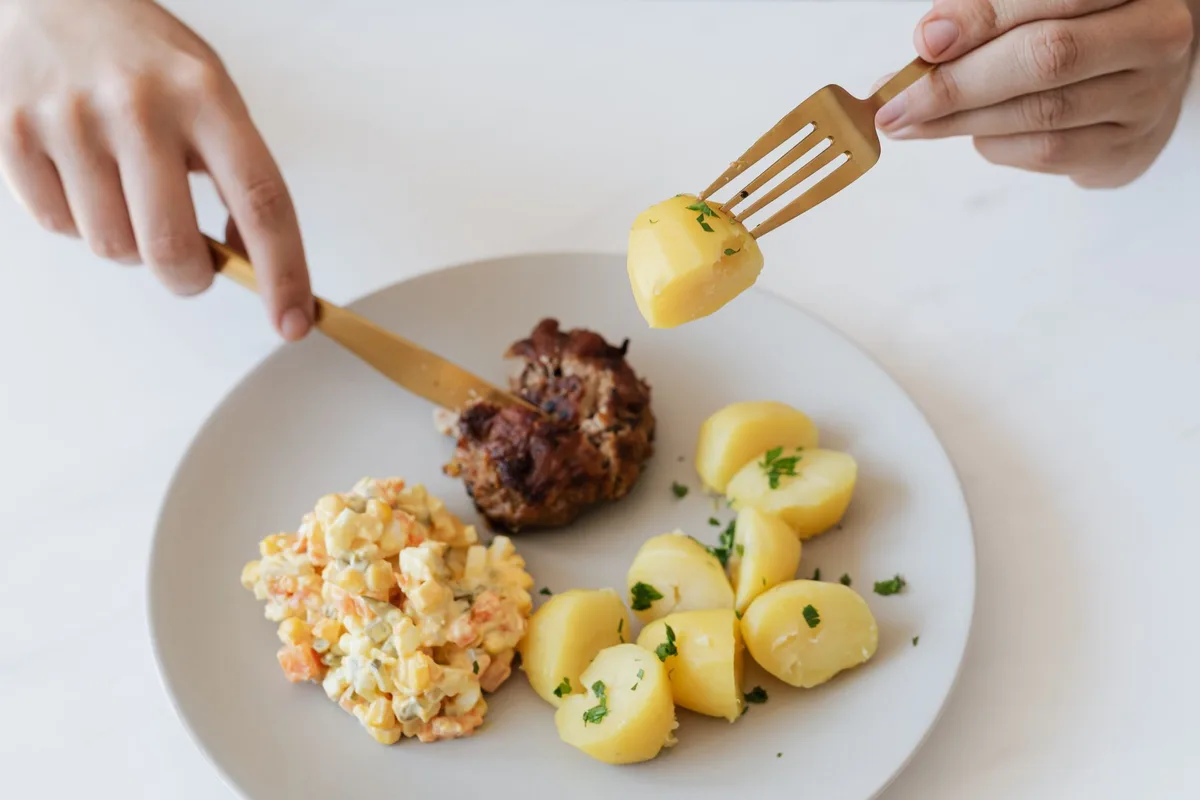
The fork test. Insert a fork or knife into the thickest part of the potato. Push down gently. If the fork goes in with almost no resistance and the potato feels tender inside, it's done. If you feel firm resistance or the fork stalls halfway through, it needs more time.
Add 2-3 minutes and check again.
The squeeze test. Wearing an oven mitt (it's hot), gently squeeze the potato. A fully cooked potato gives slightly under pressure but doesn't collapse. An undercooked one feels hard and unyielding. A way-overcooked one might feel mushy or split at the seams.
You want the middle ground.
The knife insertion test. A small sharp knife should slide through the center easily with minimal pressure. No sawing required. If you're meeting resistance, it's not ready.
Check doneness starting at the minimum time from the table above. For a medium russet at 380°F, that's around 15 minutes. Open the basket, insert your fork into the thickest potato (usually the center one if you're cooking multiple), and test. If some potatoes are done and others aren't, you can remove the done ones and give the others 3-5 more minutes.
Don't trust the color of the skin alone. A potato can look beautifully golden and still have a rock-hard center. Don't trust cooking time alone either, because air fryer wattage varies so much between brands. Always test doneness with a fork before calling it finished.
The Biggest Mistakes and How to Avoid Them
Not pricking the skin before cooking. Steam builds up inside a sealed potato. If there's nowhere for it to escape, the potato will burst or split open. This isn't dangerous, but it makes a mess and leaves your potato ruined. Pierce the skin 3-4 times with a fork before you load it into the air fryer.
Simple step, huge difference.
Skipping the doneness test. You can't see inside, so don't guess. The skin might look perfectly golden while the center is still rock hard. Insert a fork at the minimum time from the chart, not after. Too many people add 10 extra minutes "just to be safe" and end up with shriveled, dry potatoes.
One fork test takes 5 seconds.
Crowding the basket. If potatoes are touching or overlapping, the side against the bottom won't crisp, and the top won't cook evenly. Space them out so air flows all around each one. If that means cooking fewer potatoes per batch, that's fine. Crowding slows the whole process down anyway.
Cooking with wet skin. Moisture on the surface steams the potato instead of crisping it. Pat potatoes completely dry before they go in. This is one of those steps that takes 10 seconds but changes the result.
Wrong temperature. If you go below 350°F, cooking times balloon and the skin stays pale. If you jump to 425°F to save time, the skin burns before the inside cooks through. Stick with 375-380°F as your baseline.
Expert Tips for Better Results Every Time
Start checking at the minimum time, not the maximum. If the chart says 15-20 minutes, check at 15. Finding out it's done early feels great. Finding out at 25 minutes that you've cooked it for 10 too long feels terrible. Err on the side of checking early.
Season the skin before cooking if you want it crispy. A light oil and salt helps the outside crust up. Skip the oil if you want a healthier version, but accept that the skin won't crisp as much. Both versions taste fine, it's just a texture preference.
If you're cooking a full basket, use parchment paper. A small sheet under the potatoes keeps the basket cleaner and prevents sticking on very rare occasions. It's optional, but aggregate reviews suggest it prevents one more frustration point.
Batch cook strategically if you're meal prepping. The air fryer stays hot between batches, so the second round cooks 1-2 minutes faster. Check it earlier than your first batch. Once you know the exact time your machine needs, subsequent batches are faster.
Let potatoes cool before handling them. You can eat one immediately if you're hungry, but wear mitts. Let extras cool for 2-3 minutes so they firm up and are easier to cut.
FAQs: Questions That Keep Coming Up
Can I cook different potato types together?
You can, but it's not ideal. Fingerlings and russets cook at very different rates. If you mix them, either the fingerlings are overdone or the russets are underdone. Cook by type, not by "whatever's in my kitchen."
What happens if my potato bursts open?
It's still edible. The insides won't fall out into the basket, and it tastes normal. It just looks a bit messy. Pricking the skin beforehand prevents this almost completely.
Can I wrap potatoes in foil?
Technically yes, but it defeats the purpose. You wanted a crispy skin. Foil steams the potato instead, giving you a texture closer to boiling. Skip the foil and just prick it instead.
Do I really need to oil the skin?
No. Oil helps with crispiness, but it's optional. Unolied potatoes cook fine and turn out tender inside. You lose some of the browned, crispy exterior, but the flavor is still good.
Can I cook frozen potatoes?
Don't do it. Frozen potatoes are almost always pre-cooked or blanched. Cooking them in an air fryer will turn them mushy. Use fresh or fully thawed potatoes only.
How long do cooked air-fried potatoes last?
Store them in the fridge in an airtight container for up to 4 days. You can reheat them in the air fryer for 5 minutes at 320°F if you want them warm again. They're also good cold in salads or as a side dish for high-protein vegetarian air fryer recipes.
