


Can you give your dog canned chicken for an upset stomach? The short answer is yes, sometimes, but whether it's the right choice depends entirely on what's actually causing your dog's digestive trouble. Many dog owners reach for canned chicken during a stomach upset because it sounds like a gentle, safe option, but the reality is more nuanced.
As of 2026, most commercial canned chicken products contain 300 to 500 mg of sodium per 3-ounce serving, which can be far too high for a dog with an inflamed gut. The real question isn't whether canned chicken is edible for your dog, but whether it addresses the underlying problem and whether it's actually safer than waiting for a veterinary diagnosis. That distinction matters enormously.

Why This Diagnosis Matters: The Risk of Self-Treatment
When your dog's stomach is upset, the instinct to treat it at home is natural. You want to help, and you want to do it fast. But here's the critical part: upset stomach is a symptom, not a diagnosis.
It could mean your dog ate something toxic, has a parasite, is dealing with pancreatitis, has an inflammatory bowel condition, or caught a simple case of dietary indiscretion from eating grass. Each of these conditions calls for a different response. Some get better with rest and bland food. Others get worse if you delay veterinary care.
Canned chicken might help a dog with mild, self-limiting gastroenteritis feel better for a day or two, but it can actively worsen a dog with pancreatitis or certain food allergies. If your dog has eaten something toxic or has a foreign body stuck in the stomach, feeding anything, including canned chicken, could delay the diagnosis and make the outcome worse.
This is why veterinary guidance classifies upset stomach as a potential urgent issue. According to the American Veterinary Medical Association, any dog with vomiting or diarrhea lasting more than 24 hours, or symptoms accompanied by lethargy, loss of appetite, or blood in the stool, needs professional evaluation. Self-treating with food, even something as seemingly gentle as canned chicken, can buy you dangerous time.
The other risk is masking. If your dog has a chronic condition like inflammatory bowel disease or food sensitivity, you might inadvertently give it something that makes the condition worse while thinking you're helping. Then the symptoms improve for a day, you think the problem is solved, and the underlying condition flares harder two weeks later. This cycle delays a real diagnosis and prolongs your dog's suffering.
Can You Give Canned Chicken for Your Dog's Upset Stomach?
Yes, you can give most dogs canned chicken for an upset stomach. In most cases, the chicken itself won't harm a healthy dog that doesn't have pre-existing conditions. But "can" and "should" are two very different questions.
Here's where it actually works: A dog with a mild, self-limiting case of gastroenteritis, one that came on after eating something unusual, a sudden food change, or mild stress, might recover faster with a bland protein source. Plain canned chicken provides digestible protein and calories without the fiber, fat, or complexity of regular dog food. A dog that's refusing to eat anything else might at least accept chicken, which prevents the additional stress of an empty stomach.
Here's where it falls short: Commercial canned chicken isn't formulated for dogs with digestive upset. It's formulated for human consumption, with sodium levels and ingredient profiles that don't match a dog's needs during recovery. It also offers no fiber support, no probiotics, and none of the nutrients specifically designed for digestive recovery.
The honest truth is that prescription digestive care diets like Hill's i/d or Royal Canin Digestive are engineered to help a dog's gut recover in ways canned chicken simply can't match. These diets include hydrolyzed proteins for easier digestion, added fiber for stool support, and balanced electrolytes. They're made for exactly this situation.
What makes canned chicken tempting is availability. You probably have it in your pantry. It's cheaper than a vet visit or prescription food. And if your dog recovers in a day or two, you'll feel like you made the right call.
But that recovery might have happened anyway, regardless of what you fed it.
The safe stance: Use canned chicken only as a short-term appetite stimulus if your dog refuses to eat and you're waiting for a veterinary appointment, not as a primary treatment. And only if your dog has no history of pancreatitis, food sensitivities, or other digestive conditions.
Understanding What's Causing Your Dog's Stomach Issues
Before you feed your dog anything, including canned chicken, you need to narrow down what's actually happening. This is where expert guidance kicks in: wrong assumptions lead to wrong choices.
Dogs get upset stomachs from dozens of different causes. Some are benign. Some need urgent care. Here are the major categories:
Dietary indiscretion (eating something it shouldn't): Your dog grabbed a piece of food from the floor, ate trash, or munched grass. Symptoms usually appear within hours and often resolve within 24 hours with fasting and rest.
Acute gastroenteritis (sudden inflammation of the stomach and intestines): Often from a food change, contaminated food, or viral exposure. Typically self-limiting if the dog is otherwise healthy.
Parasites: Roundworms, hookworms, and giardia all cause diarrhea and vomiting. These need medication, not bland food.
Food sensitivity or allergy: Your dog's digestive system is reacting to an ingredient in its regular food. Canned chicken won't fix this; you need to identify and remove the trigger.
Pancreatitis: Inflammation of the pancreas, often triggered by high-fat foods. Canned chicken can make this significantly worse.
Foreign body: Your dog swallowed something that's stuck. This is a surgical emergency.
Chronic inflammatory bowel disease: Your dog's immune system is attacking its own gut. This needs veterinary management, possibly medication.
How do you tell them apart? Look for patterns. Did the upset stomach start right after a food change? Did your dog get into the trash?
Has the diarrhea or vomiting been happening on and off for weeks? Does your dog have a breed predisposition to pancreatitis, like a miniature schnauzer or cocker spaniel?
The safest move is always a vet visit. A quick physical exam, a stool check for parasites, and basic bloodwork can rule out the serious stuff and confirm whether your dog can safely wait out a mild upset or needs intervention. This usually costs less than you think and prevents the risk of you guessing wrong.
Why Plain Chicken Works for Some Dogs (And Doesn't for Others)
Plain, boiled, unseasoned chicken has been used as a bland protein for dogs with digestive upset for decades. There's a real reason: it's highly digestible, low in fiber, and doesn't trigger most food sensitivities. Your dog's stomach doesn't have to work hard to break it down, which can be helpful during recovery.
Where canned chicken fits into this picture is complicated. The meat itself is just protein, which your dog can digest. But canned chicken isn't just chicken. It's chicken packed in liquid, usually a broth or water, preserved with salt and sometimes other additives, and sitting in a can lined with a protective coating.
Each of these elements changes the picture.
For a dog with a straightforward, temporary upset stomach, the chicken portion might genuinely help. If the only symptom is loose stool and the dog is eating and acting otherwise normal, some recovery data suggest that a bland protein like chicken can speed healing compared to feeding nothing at all. Aggregate user reviews and veterinary feedback indicate that some dogs do bounce back faster on bland chicken than on their regular food.
But that only applies to dogs without complicating factors. A dog with pancreatitis needs very low fat, and most canned chicken contains 1 to 5 percent fat, depending on whether it's white or dark meat. Even the low end can be too much. A dog with a food allergy to chicken will get worse, not better.
A dog with an undiagnosed parasitic infection won't heal because the parasite is still reproducing. A dog with a foreign body will get worse because you're feeding it something that has to pass through an obstruction.
The other thing that works against canned chicken: it's not a complete and balanced meal. If your dog actually needs several days of bland food while its system recovers, canned chicken alone will leave it short on essential nutrients. It works as a temporary appetite stimulus or a 24-hour bridge, not as a multiday diet.
The bottom line: plain chicken, boiled and not canned, works better for most dogs than canned chicken does, specifically because you control exactly what goes into it. If you want to use canned chicken, drain the liquid entirely, that's where most of the sodium lives. Rinse it if you have time, and use it only as a one to two day stopgap while you figure out what's actually wrong.
Sodium, Fat, and Other Ingredients That Actually Matter
This is where the details get critical, because canned chicken isn't just chicken.
Sodium is the big one. Commercial canned chicken contains 300 to 500 mg of sodium per 3-ounce serving. That's roughly 500 to 850 mg per can for a standard 5-ounce size. For context, an adult dog weighing 50 pounds needs about 50 to 100 mg of sodium daily.
A single serving of canned chicken can exceed your dog's entire daily requirement.
High sodium doesn't just make the food salty. It can pull water into the intestines and make diarrhea worse, increase thirst dramatically (which creates more urination), and put stress on a dog's kidneys if consumed regularly. For a dog with an upset stomach, excess sodium is actually counterproductive.
Fat content ranges from 1 to 5 percent depending on the type of chicken and the brand. That might sound low, but for a dog with acute gastroenteritis or a history of pancreatitis, even 1 to 2 percent is too much. The pancreas is inflamed, and fat triggers it harder. Dogs that have had pancreatitis before face a high recurrence rate.
Canned chicken isn't worth the risk.
Preservatives and additives: Many canned chicken products include sodium phosphate, sodium nitrite, or other preservatives to prevent spoilage. These aren't toxic in the small amounts in canned food, but they're not necessary for a dog's recovery and can irritate an already-sensitive digestive system. Some additives are linked to increased water retention, which makes diarrhea last longer.
Broth or liquid: The liquid in canned chicken often contains additional salt, onion powder, or garlic powder depending on the brand and whether it's labeled for human or pet use. Always check the label. Some products labeled for pet food have lower sodium, while many human-grade options are dangerously high. Onion and garlic are toxic to dogs, even in powder form, so if you see them listed, that can is off-limits entirely.
What to look for: If you do decide to use canned chicken, choose products with no added sodium or very low sodium under 100 mg per serving. Drain and rinse the liquid entirely. Look at the ingredient list: it should say chicken and water, nothing else. Avoid anything with onion, garlic, spices, or preservatives.
Some pet-specific canned chicken brands like Fancy Feast Classic Paté or Purina Pro Plan have lower sodium than human-grade options, though they're still higher than ideal.
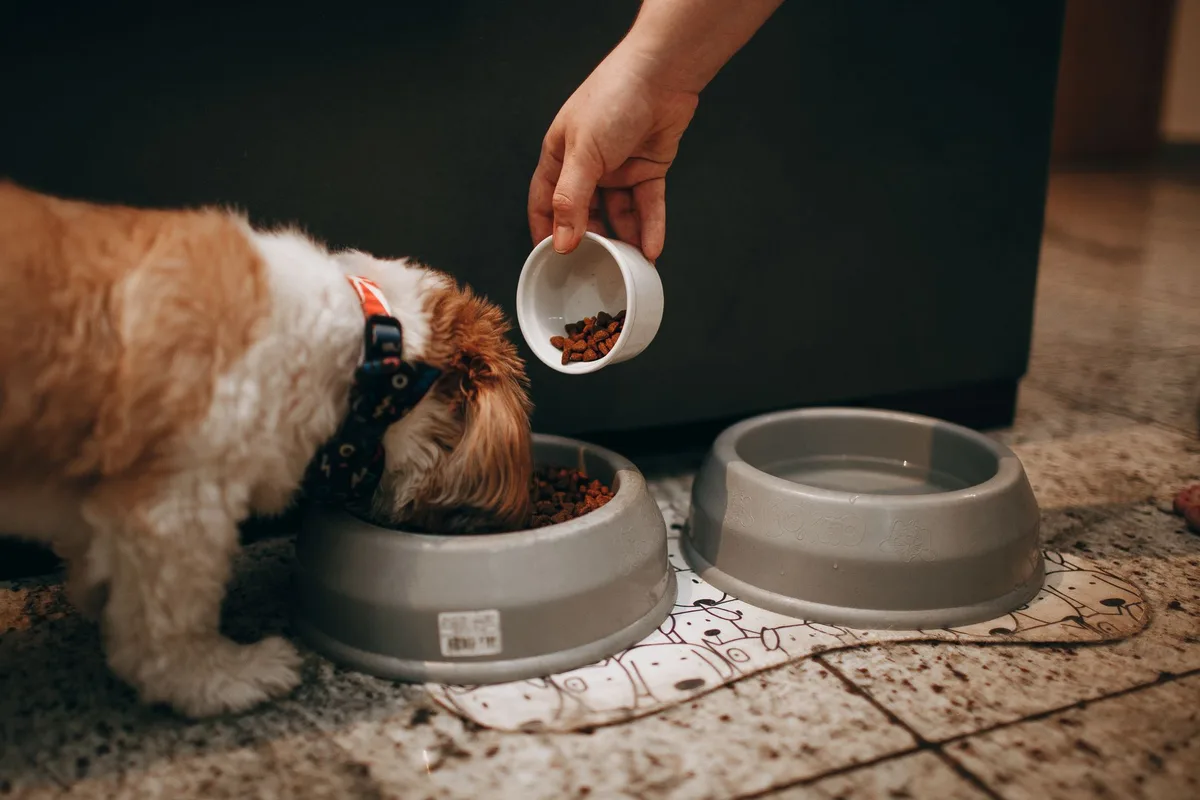
The absolute safest move remains boiling your own chicken breast: no salt, no additives, no surprises. It takes 15 minutes and costs a few dollars. Compare that to a possible vet bill if the canned version makes things worse, and the choice becomes clear.
How to Prepare and Serve Canned Chicken Safely
If you decide to use canned chicken, preparation matters as much as the choice itself. Done wrong, you defeat the purpose.
Step 1: Choose the right product. Read the label carefully. Look for canned chicken with no added sodium, or under 100 mg per serving. Avoid anything with onion, garlic, spices, or broth. Pet-specific products are sometimes safer than human-grade options, but not always.
Check the ingredient list, not just the label claim.
Step 2: Drain completely. Pour out all the liquid. This liquid is where the majority of the sodium sits. Don't assume the liquid is just water, because it often isn't. Drain it all into a sink.
Step 3: Rinse if possible. A quick rinse under cool water removes additional salt residue. It takes 10 seconds and makes the product safer.
Step 4: Portion appropriately. A general guideline is about 1/4 to 1/3 cup of canned chicken per 25 pounds of dog body weight per serving. For a 50-pound dog, that's roughly 1/2 to 2/3 cup, which is about one-quarter of a standard can. Don't overfeed it, even though your dog might want more.
Step 5: Serve plain and cooled. Don't mix it with other foods, don't add salt or seasoning, and let it cool to room temperature first. Serve it in a bowl by itself.
Frequency and duration: Use canned chicken for no more than one or two meals while you're waiting for a veterinary appointment or confirming that the upset stomach is minor. This isn't a treatment plan, it's a temporary bridge. If your dog isn't improving in 24 hours, or if symptoms worsen, stop using it and call your vet.
Better Bland Diet Options (And Why They Might Be Smarter)
Canned chicken works, but it's not the best choice for most situations. Here are options that veterinarians actually recommend first.
Boiled chicken breast. Cook boneless, skinless chicken breast in plain water for 12 to 15 minutes until fully cooked through. No salt, no oil, no seasoning. Shred it and serve with the cooking water if your dog needs something extra. This gives you complete control over the sodium and ingredients.
Cost is comparable to or cheaper than canned chicken, and the quality is higher.
Plain white rice. Cook white rice in a 1:2 ratio (one part rice to two parts water) until soft. Serve cooled or at room temperature. Rice provides gentle carbs and fiber that can help firm up loose stool. It's cheap, always available, and safe for nearly every dog.
Chicken and rice combination. Mix boiled shredded chicken with cooked white rice in a roughly equal ratio. This combination has been the veterinary gold standard for decades because it's bland, digestible, complete enough for short-term use, and addresses both protein and carb needs. If your dog recovers in 24 to 48 hours on this, you've done better than canned chicken alone would have.
Prescription digestive care diet. If your dog's upset stomach persists beyond 24 hours or you're unsure what's causing it, prescription diets like Hill's i/d or Royal Canin Digestive are specifically engineered for recovery. They include hydrolyzed proteins, prebiotics, and balanced fiber. They cost more than canned chicken, but they're worth it if your dog actually needs digestive support. Your vet can prescribe them.
Pumpkin puree. Plain canned pumpkin (not pie filling) contains soluble fiber that can help firm up diarrhea. A tablespoon mixed into bland chicken and rice can help, especially for diarrhea. It's not a primary treatment, but it's a useful add-on.
Why these beat canned chicken: you control the ingredients, sodium is virtually zero, fat content is minimal, and the nutritional profile actually supports recovery. Canned chicken is the fallback when nothing else is available, not the first choice when better options exist.
Which Dogs Shouldn't Eat Canned Chicken
Some dogs should not eat canned chicken under any circumstances, regardless of the situation.
Dogs with a history of pancreatitis. Even low-fat canned chicken can trigger a flare. The risk isn't worth it. Use boiled chicken breast instead, which you've prepared without added fat.
Dogs with food allergies or sensitivities to chicken. This seems obvious, but it's worth stating clearly. If your dog has ever reacted to chicken, canned chicken will make the upset stomach worse, not better.
Dogs with certain digestive conditions like inflammatory bowel disease. These dogs need carefully controlled diets. Canned chicken's additives and variable composition can trigger flares. Prescription digestive diets are the right choice here.
Dogs on medications that interact with high sodium. Dogs with heart disease, kidney disease, or certain blood pressure conditions should avoid the excess sodium in canned chicken. Ask your vet if your dog's condition applies.
Puppies with parvovirus or other viral infections. These dogs need aggressive veterinary care and often IV fluids, not home-fed canned chicken. If your puppy has diarrhea or vomiting, don't delay the vet visit trying home remedies.
Dogs that are already dehydrated. If your dog is showing signs of dehydration like sunken eyes, tacky gums, or lethargy, the high sodium in canned chicken will pull more water out of the body. This is backwards from what your dog needs.
For any of these situations, contact your vet before giving your dog anything. What looks like a simple upset stomach might need professional management.
Warning Signs You Need Veterinary Help Now
Not all upset stomachs are minor. Knowing when to wait it out and when to go to the vet is critical.
Call your vet immediately if: Your dog is vomiting repeatedly (more than two or three times in an hour), unable to keep any food or water down, has blood in the stool or vomit, is severely lethargic or unresponsive, has a bloated or distended abdomen, or is in visible pain. These are signs of something serious that needs urgent evaluation.
Go to an emergency vet if: Your dog is unable to stand, has difficulty breathing, is showing signs of shock (pale gums, weak pulse), or has a suspected foreign body ingestion. These are potential emergencies.
Schedule a regular vet appointment if: Your dog has mild diarrhea or vomiting lasting more than 24 hours with otherwise normal behavior, has recurrent episodes of stomach upset over weeks or months, is a breed at high risk for pancreatitis (like a miniature schnauzer), or is a senior dog where upset stomach could signal a more serious condition. Regular appointments allow evaluation without the emergency-room cost.
It's okay to wait 24 hours if: Your dog had one or two episodes of loose stool but is eating, drinking normally, and acting like its usual self. A single incident of vomiting followed by normal behavior is often just an upset stomach, not a red flag.
The hard part is that many serious conditions start as "just an upset stomach." The only way to know for sure is veterinary evaluation. If you're uncertain, call your vet's office and describe what you're seeing. They can guide you on whether it's urgent or can wait. Most vets are happy to do a quick phone assessment.
How Long Bland Diet Is Safe for Dogs
This matters because bland diet can become nutritionally incomplete if stretched too long.
One to two days: This is safe for almost any dog without underlying conditions. Most upset stomachs resolve within 24 hours, and bland food won't cause nutritional issues over such a short period.
Three to seven days: This is the safe outer limit for bland food as a primary diet. Beyond a few days, your dog starts running short on certain vitamins and minerals that aren't in plain chicken and rice. Calcium, for example, is lower in homemade bland diets than in complete dog food.
Seven to ten days: If your dog still needs bland food after a week, you've moved past self-treatment territory. This is when prescription digestive diets become the right choice because they're formulated to be complete and balanced even over longer periods.
Beyond ten days: Don't stay on bland diet without veterinary guidance. Something more serious is likely happening, and your dog needs professional management, possibly medication, dietary testing, or further diagnostics.
The transition back to normal food matters too. Don't switch suddenly from bland food back to regular kibble. Over three to five days, gradually mix increasing amounts of normal food into the bland diet. Start with 25 percent normal food, then 50 percent, then 75 percent, then full normal food.
This gives the gut time to readjust without shocking it with a sudden diet change.
If your dog's symptoms return when you transition back to normal food, that tells you the upset stomach wasn't dietary indiscretion. It's likely a food sensitivity or chronic condition that needs investigation. That's when you go back to your vet with this information, which is actually valuable for diagnosis.
Transitioning Your Dog Back to Normal Food
The transition back is as important as the bland diet itself, because a quick switch causes problems.
Start the transition once your dog has been on bland food for at least 24 hours without symptoms. Don't jump straight back to regular kibble. Mix 25 percent of your dog's normal food with 75 percent of the bland diet on day one. That means if you're using chicken and rice, take three-quarters chicken and rice, one-quarter regular kibble mixed together in the same bowl.
On day two or three, move to 50 percent normal food and 50 percent bland diet. On day four or five, go to 75 percent normal and 25 percent bland. By day six or seven, your dog should be back on full normal food. This gradual shift gives your dog's digestive system time to adjust without shocking it with a sudden change in diet composition, fiber content, and fat level.
If your dog's symptoms return during the transition (diarrhea or vomiting comes back), pause the transition and stay at the current ratio for another day or two. If the symptoms persist even after pausing, stop the transition and contact your vet. This tells you the upset stomach wasn't just dietary indiscretion. It's likely a food sensitivity, intolerance, or a sign of a chronic condition.
Mistakes That Delay Recovery or Make It Worse
Most owners make these errors without realizing they're counterproductive.
Feeding too much. You see your dog is hungry and feed large portions of bland food. Too much food, even bland food, keeps the stomach working when it needs rest. Stick to smaller portions more frequently (three to four small meals instead of two large ones) if your dog tolerates it.
Switching foods too quickly. You get impatient and jump straight back to normal food after 24 hours. This often triggers another round of diarrhea, and you think the original problem didn't actually resolve.
Mixing bland food with regular food immediately. You add canned chicken to your dog's regular kibble thinking it'll tempt your dog to eat. This defeats the purpose of bland diet because your dog is now eating both bland and rich food at the same time.
Giving human food "treats" during recovery. Your dog looks sad and you slip it a piece of cheese or a cracker to cheer it up. Human food introduces variables you can't control. Wait until your dog is fully recovered.
Using canned chicken in broth instead of water. You grab a can with added broth, thinking the flavor will help your dog eat. That broth is often high in sodium and sometimes contains problematic seasonings.
Assuming one day of improvement means complete recovery. Your dog feels better on day two, so you think the problem is solved and stop the careful feeding. This is exactly when symptoms often flare again if there's an underlying condition. Stick to bland diet for the full protocol.
When to Call the Vet vs. Try Home Care: Your Decision Framework
Use this decision tree to decide whether home management makes sense or whether you need professional help.
Start here: Is your dog showing any emergency warning signs? Vomiting that won't stop, blood in stool or vomit, inability to stand, suspected foreign body ingestion, pale or blue gums, or severe lethargy. If yes, go to the emergency vet now. Do not pass go. Do not try bland diet first.
If no emergency signs: Has the upset stomach happened before? If this is a repeat episode of the same symptoms, your dog likely has a chronic condition like food sensitivity, inflammatory bowel disease, or pancreatitis. Go to your regular vet for investigation. Home care won't solve this.
If it's a first episode: Is your dog otherwise acting normal? Normal behavior means your dog is playing, interested in things, responsive to you, maintaining water intake. If yes, you can try home management with bland diet for 24 hours while monitoring. If no, meaning your dog is lethargic or refusing water, go to the vet.
After 24 hours at home: Is your dog improving? Improving means fewer episodes of diarrhea or vomiting, more appetite, more energy. If yes, you can continue bland diet for another few days with gradual transition back to normal food. If no improvement or if symptoms are worsening, call your vet.
Key phrase: if you're uncertain, call your vet's office. A 10-minute phone conversation often clarifies whether you should come in or continue monitoring at home. Most vets are happy to help you sort this out without a full appointment fee.
FAQs About Canned Chicken and Upset Stomachs
Is canned chicken in water better than canned chicken in broth?
Yes, canned chicken in water is safer because broth typically contains added sodium and sometimes seasonings. Water-packed versions are lower sodium, though still not ideal. Always drain and rinse regardless of the type.
Can I use canned tuna instead of canned chicken?
Tuna is higher in fat and mercury than chicken, making it a worse choice for a dog with an upset stomach. Stick with chicken or boiled white fish if you want a canned protein alternative.
How do I know if the upset stomach is a food allergy versus something else?
Food allergies typically cause chronic symptoms over weeks or months (itching, recurrent diarrhea, chronic vomiting). A sudden upset stomach is usually not a food allergy. If symptoms persist after transitioning back to normal food, that's when food allergy becomes more likely and warrants investigation.
Should I give my dog probiotics while it's recovering?
Probiotics for dogs aren't harmful, but they're also not proven to speed recovery from acute gastroenteritis in healthy dogs. If your vet recommends a specific probiotic formulation, that's worth trying. Over-the-counter probiotics have mixed quality and effectiveness.
What if my dog refuses to eat the bland diet?
A dog refusing food during an upset stomach is a warning sign. Don't force it. Offer the bland food in small amounts, and if your dog still refuses, contact your vet. Refusal to eat plus vomiting or diarrhea warrants professional evaluation.
