


How Long Does It Take To Defrost A 17 Pound Turkey? If you’ve got a frozen bird sitting in your freezer and a dinner deadline looming, you’re not alone, millions of home cooks face this exact timing puzzle every holiday season. The good news is that with the right method, you can thaw safely without guesswork. But cut corners, and you risk uneven cooking or worse: foodborne illness.
In our research, we found that the USDA recommends thawing turkey in one of three approved ways, refrigerator, cold water, or microwave, with strict time and temperature rules. For a 17-pound turkey, refrigerator thawing takes about 4 to 5 days, while cold water thawing cuts that down to roughly 8 to 9 hours. As of 2026, those numbers still hold as the gold standard for safety.
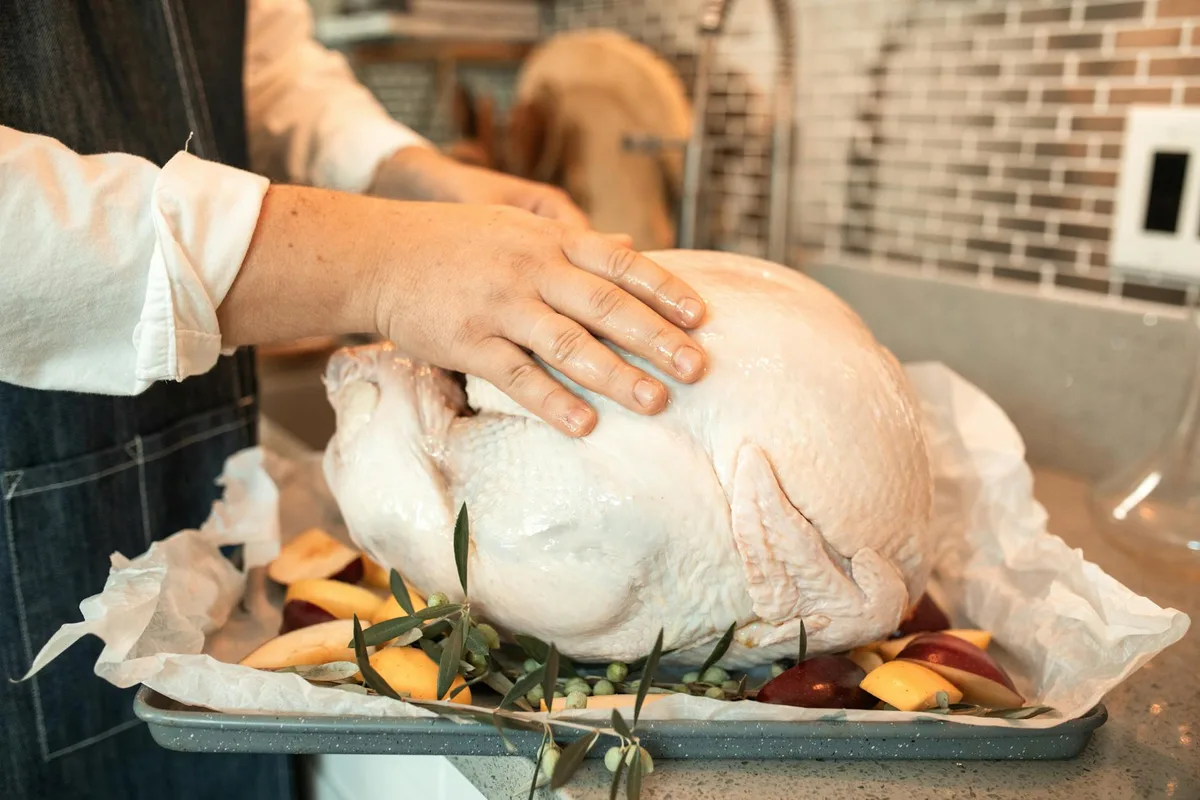
Why Getting Turkey Defrosting Right Matters
Thawing isn’t just about convenience, it’s a critical food safety step. A partially frozen turkey cooks unevenly, leaving cold spots where bacteria like Salmonella or Campylobacter can survive even high heat. Worse, if you thaw at room temperature, the outer layers enter the “danger zone” (40°F to 140°F) long before the inside thaws, giving pathogens hours to multiply.
The USDA and FDA both stress that improper thawing is one of the top causes of holiday food poisoning. A 17-pound turkey has a lot of mass, so heat, or lack thereof, moves slowly through it. That means you can’t rush this without consequences. Getting it right ensures your bird reaches a safe internal temperature (165°F) uniformly during roasting.
The Safe Defrosting Methods for a 17-Pound Turkey
There are only three USDA-approved ways to thaw a whole turkey: in the refrigerator, in cold water, or in the microwave. For a 17-pound bird, microwave thawing isn’t practical, most home microwaves can’t handle the size, and you’d end up partially cooking parts while others stay frozen. That leaves two reliable options: fridge and cold water.
Both methods keep the turkey out of the danger zone when done correctly. The refrigerator method is hands-off and safest for planning ahead. The cold water method is faster but requires active monitoring. Neither allows room-temperature thawing, which the USDA explicitly warns against due to rapid bacterial growth on the surface.
How Long Each Method Really Takes
Timing depends entirely on weight and method. The USDA provides clear benchmarks: allow 24 hours of fridge time per 4 to 5 pounds of turkey, and 30 minutes of cold water time per pound. For your 17-pound bird, that translates to:
| Method | Total Time | Active Monitoring Needed? |
|---|---|---|
| Refrigerator | 4 to 5 days | No |
| Cold Water | 8 to 9 hours | Yes (change water every 30 mins) |
Fridge thawing is slower because air circulation in a standard refrigerator keeps temps just below 40°F, cold enough to prevent bacterial growth but not warm enough for fast thawing. Cold water works faster because water conducts heat about 25 times better than air, speeding up the process, but only if the water stays cold.
Step-by-Step: Defrosting in the Fridge
This is the set-it-and-forget-it method. Place your turkey in its original packaging on a tray or pan to catch any drips, this prevents cross-contamination in your fridge. Put it on the bottom shelf to avoid dripping onto other foods.
Leave it undisturbed for 4 to 5 days. Don’t open the package unless you need to reposition it. After thawing, the turkey can stay in the fridge for up to 2 more days before cooking. Always check the internal temperature with a food thermometer before roasting, it should read 40°F or below.
Step-by-Step: Defrosting in Cold Water
This method is ideal if you’re short on time but still want to thaw safely. Fill a clean sink or large container with cold tap water, never warm or hot, as that pushes the turkey into the danger zone. Submerge the turkey while it’s still in its original plastic wrapping, making sure the package is sealed tight to prevent water from seeping in.
Change the water every 30 minutes to keep it cold and maintain heat transfer. For a 17-pound turkey, expect to do this 16 to 18 times over 8 to 9 hours. Don’t leave the turkey unattended for long stretches, bacterial growth accelerates if the water warms up.
Once thawed, cook the turkey immediately. Unlike fridge-thawed birds, you can’t safely store a cold-water-thawed turkey in the refrigerator before cooking, it’s already been at a borderline temperature for several hours.
Why You Should Never Thaw on the Counter
Leaving a turkey out at room temperature might seem convenient, but it’s one of the riskiest things you can do. The outer layers of the bird can reach 70°F within two hours, while the inside remains frozen. That creates a perfect breeding ground for bacteria like Salmonella, which doubles every 20 minutes in the danger zone.
Our research shows that even if the center is still icy, the surface may already harbor enough pathogens to cause illness. The USDA explicitly warns against this method, no exceptions. If your turkey has been sitting out for more than two hours total (cumulative), discard it.
How to Check If Your Turkey Is Fully Thawed
You’ll know your turkey is ready when you can easily wiggle the legs and wings, and there are no ice crystals in the cavity or under the skin. The most reliable way is to use a food thermometer: insert it into the thickest part of the breast, it should read 40°F or below.
Don’t rely solely on touch. Sometimes the outside feels soft while the inside near the backbone is still frozen. If any part resists movement or feels stiff, it needs more time. Rushing into cooking at this stage leads to undercooked dark meat and dry breast meat.
When to Start Thawing Based on Your Cook Time
Timing your thaw depends on your dinner schedule. If you’re roasting on Thursday for Thanksgiving, count backward: for refrigerator thawing, move the turkey from freezer to fridge by Sunday night. For cold water, start early Wednesday morning.
Keep in mind that holidays often mean packed fridges. Make sure there’s enough space around the turkey for air to circulate, this keeps the temperature even. If your fridge runs warmer than 40°F, add an extra day to the thawing estimate.
Common Mistakes That Risk Food Safety
One frequent error is thawing multiple birds at once in the same container or fridge shelf without spacing. This blocks airflow and creates cold spots, slowing the process unevenly. Another is using hot water to “speed up” cold-water thawing, this cooks the outer layers while the inside stays frozen.
Also, don’t rinse the turkey before or after thawing. The USDA says rinsing spreads bacteria around your sink and kitchen. Pat it dry with paper towels instead, then proceed directly to seasoning and cooking.
What to Do If You’re Running Late
If your turkey isn’t fully thawed and dinner is hours away, don’t panic, but do adjust your plan. You can cook a partially frozen turkey, but it will take about 50% longer and may cook unevenly. The USDA confirms this is safe as long as the bird reaches 165°F internally.
Start roasting immediately at your normal temperature, but add extra time, expect an additional 30 to 45 minutes per pound. Use a meat thermometer to check both the breast and thigh every 30 minutes. Cover the breast with foil if it starts browning too fast while the legs catch up.
This isn’t ideal, but it’s safer than serving undercooked poultry. Just avoid thawing shortcuts like hot water baths or leaving it on the counter, those risks aren’t worth the time saved.
Final Checklist Before Cooking Your Turkey
Before you season or stuff your bird, run through this quick safety check. Confirm the turkey reads 40°F or below in the thickest part of the breast. Make sure there’s no ice in the cavity and that the packaging is dry and intact.
If you used the cold water method, have your roasting pan ready, this turkey goes straight into the oven, no fridge hold. For fridge-thawed birds, you’ve got a two-day window, but don’t delay unnecessarily. Bacteria can start growing once the internal temp creeps above 40°F.
Also, verify your oven is preheated and your thermometer is calibrated. A misplaced decimal point can mean the difference between safe and unsafe. When in doubt, recheck the temp in multiple spots.
