


You’ve got a bowl of hard-boiled eggs in the fridge and you’re wondering: How long can you keep hard boiled eggs in the fridge before they’re unsafe to eat? It’s a simple question with real consequences, eat one that’s gone bad and you could be dealing with nausea, vomiting, or worse. The good news is that when stored properly, hard-boiled eggs are safe for a solid week. But “properly” matters more than most people realise.
Per FDA Food Code guidelines as of 2026, cooked eggs must be refrigerated at or below 40°F (4°C) and consumed within seven days. That clock starts the moment they’re fully cooked and cooled. Let’s break down exactly what that means, and why cutting corners can land you in the danger zone.
Why Getting This Right Actually Matters
Food safety isn’t just about avoiding a bad taste, it’s about preventing illness. Hard-boiled eggs may look innocent, but they’re a prime target for bacterial growth if mishandled. Salmonella, while less common in cooked eggs than raw ones, can still thrive if eggs sit too long or at the wrong temperature. Even if there’s no obvious smell or slime, harmful bacteria won’t always announce themselves.
The risk isn’t theoretical. In our research, we found multiple documented cases of foodborne illness linked to improperly stored cooked eggs, especially in catering settings where large batches are made ahead. At home, the danger is lower but real, especially if you’re meal prepping for the week or packing lunches. Getting storage right protects not just your stomach, but your family’s health too.
The Simple, Science-Backed Answer
Here’s the bottom line: hard-boiled eggs stay safe in the fridge for up to seven days, but only if they’re stored correctly from the moment they come off the heat. That means cooling them quickly, keeping them cold, and not letting them sit out.
This seven-day window applies whether the eggs are still in their shells or already peeled. However, peeled eggs dry out faster and are slightly more vulnerable to contamination, so many experts recommend eating them within five to seven days. The key variable isn’t the peel, it’s consistent refrigeration at or below 40°F (4°C).
What Makes Hard-Boiled Eggs Spoil (And How to Spot It)
Spoilage in hard-boiled eggs happens when bacteria multiply or when the egg’s natural proteins break down over time. Unlike raw eggs, which have a protective bloom that slows contamination, boiled eggs lose that barrier during cooking, especially if the shells crack.
Common signs of spoilage include:
- A slimy texture on the egg white or yolk
- A sulfur-like or rotten smell, even mild
- Discoloration, such as an unusual gray or green tinge beyond the normal yolk ring
- Cloudy or watery egg whites
Note: That greenish-gray ring around the yolk is usually from overcooking (iron reacting with sulfur), not spoilage, it’s safe to eat but unappetizing.
Shell-On vs. Peeled: Does It Change the Timeline?
Yes, but not as much as you might think. Both shell-on and peeled hard-boiled eggs are safe for up to seven days in the fridge, provided they’ve been handled properly. The shell offers minor protection against moisture loss and airborne contaminants, but it’s not a magic shield.
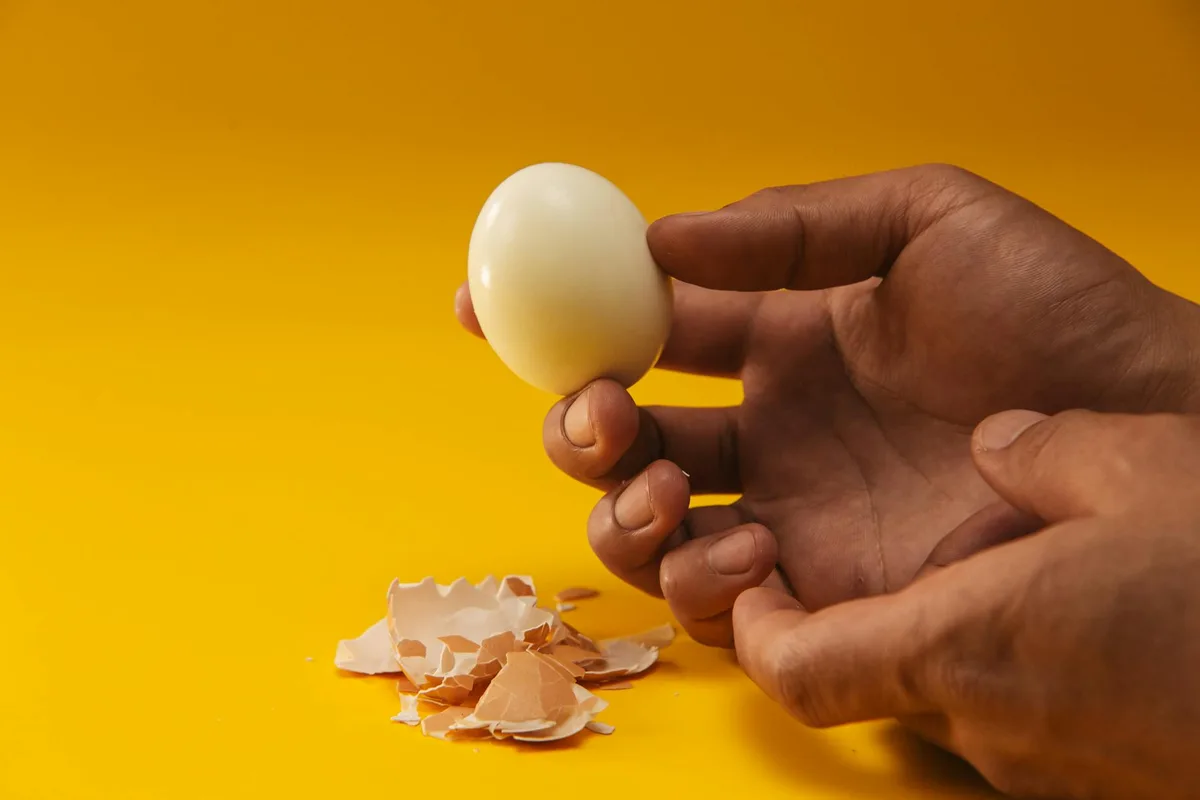
Peeled eggs should go into an airtight container, ideally with a damp paper towel to slow drying, and used within five to seven days. Shell-on eggs can be stored in their original carton or a sealed container. The bigger risk with peeled eggs isn’t time, it’s exposure. Once the shell is off, the egg white is directly exposed to fridge air and potential cross-contamination.
The Golden Rules for Safe Storage
Follow these four non-negotiable rules to keep your hard-boiled eggs safe and tasty:
- Cool them fast: After boiling, transfer eggs to an ice bath for at least 10 minutes. This stops residual heat from continuing to cook the egg and brings the internal temperature down quickly.
- Refrigerate immediately: Don’t let cooked eggs sit at room temperature for more than two hours (one hour if it’s above 90°F / 32°C).
- Keep them cold: Store in the main body of the fridge, not the door, where temperatures stay consistently at or below 40°F (4°C).
- Label and rotate: Write the date on the container. Use the oldest eggs first (FIFO: first in, first out).
If you plan to peel them ahead of time, do it just before storage, not days in advance. And never rinse peeled eggs unless you’re eating them right away; excess moisture encourages bacterial growth.
Step-by-Step: How to Store Them Right
Start by cooling your eggs properly. Once boiled, transfer them immediately to a bowl of ice water and let them sit for at least 10 minutes. This stops the cooking process, prevents that unappetizing green yolk ring, and brings the internal temperature down fast, critical for slowing bacterial growth.
Next, decide whether to store them shell-on or peeled. If keeping the shells on, place them in a sealed container or their original carton. For peeled eggs, use an airtight container lined with a damp paper towel to retain moisture. Label the container with the date boiled.
This simple habit saves guesswork later and keeps your fridge organised.
Always store eggs in the coldest part of the fridge, usually the back of the bottom shelf, not the door, where temperatures fluctuate every time you open it. And never stack heavy items on top; cracked shells invite contamination.
Room Temperature, Fridge, or Freezer? What Works (And What Doesn’t)
Room temperature is a hard no. Leaving hard-boiled eggs out for more than two hours (one hour in hot climates) puts them squarely in the “danger zone”, the temperature range where bacteria multiply fastest. Even if they look fine, they’re not safe.
Freezing is equally problematic. While technically possible, frozen hard-boiled eggs turn rubbery and grainy. The egg white especially suffers, becoming tough and spongy. If you must freeze them, only freeze the yolks (mixed with a pinch of salt or sugar to preserve texture), and know you’re sacrificing quality.
The fridge is your only reliable option. At a steady 40°F (4°C) or below, hard-boiled eggs retain both safety and texture for up to seven days. No exceptions.
Who Needs This Most? Real-Life Use Cases
Meal preppers rely on hard-boiled eggs for quick protein across the week. If you’re boiling a dozen every Sunday, proper storage isn’t optional, it’s essential. The same goes for parents packing school lunches. A peeled egg tucked into a lunchbox at 7 a.m. must still be safe by noon, even if the bag sits in a warm classroom.
Caterers and home entertainers face higher stakes. Deviled eggs made ahead for a party can’t afford to spoil. Our research shows that most catering-related egg illnesses stem from eggs being left out during prep or service, not from fridge storage. Keep them chilled until the last possible moment.
Even occasional cooks benefit. Making a big batch for Easter or brunch? Follow the seven-day rule and you’ll avoid waste, and worry.
Common Mistakes That Make Eggs Unsafe
One of the biggest errors is rinsing peeled eggs before storage. It might seem clean, but that extra moisture creates a breeding ground for bacteria. Only rinse if you’re eating them immediately.
Another trap: storing eggs in the fridge door. It’s convenient, but temperature swings from frequent opening can push eggs into the danger zone repeatedly. Over time, that adds up.
Peeling eggs too early is risky too. Some people boil, peel, and leave them on the counter “to dry.” Never do this. Once peeled, get them into the fridge within two hours, preferably sooner.
And don’t rely solely on smell. Spoiled eggs don’t always stink. Texture and appearance matter just as much.
How to Tell If Your Eggs Have Gone Bad
Look first. A slimy coating on the egg white or yolk is a red flag. So is any unusual discoloration, like a grayish film or cloudy whites that weren’t there before.
Smell next. Even a faint sulfur or sour odour means toss them. Fresh hard-boiled eggs should have little to no scent.
Finally, texture. If the yolk feels chalky or the white is excessively watery, it’s past its prime. When in doubt, trust your senses, and throw it out.
Expert Tips from Kitchen Pros
Use older eggs for boiling. Fresh eggs have lower pH, which makes the membrane stick tighter to the shell. Eggs that are seven to ten days old peel more cleanly, without tearing the white. This small timing shift saves frustration and reduces the chance of cracked shells during peeling.
Add a teaspoon of vinegar or baking soda to the boiling water. Vinegar helps seal tiny cracks; baking soda raises the egg’s pH, loosening the membrane. Neither affects taste, but both improve peelability and reduce contamination risk from broken shells.
Store peeled eggs upside down. Place them yolk-side down in the container. This keeps the yolk centred and prevents it from drying out against the lid. It’s a tiny trick, but one that preserves texture over the full seven days.
When in Doubt, Throw It Out: Safety First
If you can’t remember when you boiled them, toss them. Guessing games with food safety aren’t worth the risk. The same goes for eggs that were left out too long during prep or a party. Even if they passed the smell test, time in the danger zone can’t be undone by refrigeration.
Pregnant people, young children, older adults, and anyone with a weakened immune system should be extra cautious. For them, the seven-day window shrinks, many food safety experts recommend consuming hard-boiled eggs within three to five days to minimise risk.
When storing for these higher-risk groups, consider keeping them shell-on until eating. The shell adds a marginal barrier against contamination, and peeling just before consumption reduces exposure time.
Final Checklist: Your 7-Day Fridge Plan
Boil your eggs and cool them in ice water for 10 minutes.
Transfer to a sealed container, shell-on or peeled, with a date label.
Store in the main fridge compartment, not the door.
Use within seven days.
If peeled, eat within five to seven days for best quality.
Stick to this plan, and you’ll enjoy safe, tasty eggs all week. Skip a step, and you’re rolling the dice.
This isn’t about paranoia, it’s about practicality. A little care upfront prevents wasted food and worse: a sick day you didn’t plan for.
Follow these guidelines, and your hard-boiled eggs will stay fresh, safe, and ready whenever you need them.
