


You've got a bottle chilled, the perfect meal is ready, but your corkscrew has vanished into thin air. How can you get a cork out without a corkscrew when you're right in the moment? Don't let a missing tool spoil your plans; resourceful methods using common household items can save the day.
In our research of common kitchen scenarios, we've found that with a few simple adjustments and everyday objects, you can often uncork your wine just as effectively. These techniques prioritize safety and accessibility, meaning you likely have what you need already on hand.
No Corkscrew? Here's How to Open That Wine Bottle

The dreaded moment arrives: you’re ready to enjoy a bottle of wine, only to discover the corkscrew is nowhere to be found. This isn't an uncommon frustration in home kitchens. Manufacturer specifications for most standard wine bottles, like those produced by major wineries, indicate a cork length typically between 1.5 and 2 inches, designed for a secure fit. When that critical tool is absent, panic might set in, but thankfully, resourceful solutions exist.
Your Mission: Cork Out, No Corkscrew
The Problem: The Missing Corkscrew
You're faced with a sealed wine bottle and no corkscrew. This situation usually arises from forgetfulness, misplacement, or simply not owning one to begin with. The physical challenge is removing a compressed, cylindrical cork from the neck of a glass bottle without the specialized tool designed for extraction. This requires applying force indirectly or using improvised leverage.
Quick Insight: Your Go-To Methods Based On What You Have
When the primary tool for opening a wine bottle is unavailable, your best course of action depends on the objects readily accessible. Our research indicates that common household items can be repurposed to achieve cork removal. The key lies in understanding how to apply force correctly to either push the cork inward or leverage it outward.
Method 1: The Push-Through Technique
This method is straightforward if you have a sturdy, blunt object that can fit into the bottleneck and apply downward pressure on the cork.
How the Push-Through Works
The principle here is simple physics: by applying sustained downward force on the cork, you can overcome the friction holding it in place within the bottle's neck. The air inside the bottle, compressed between the wine and the cork, helps to push the cork through the opening once it breaks the seal.
Step-by-Step: Pushing the Cork In
- Prepare the Bottle: First, peel off the foil cap covering the top of the cork and bottle neck. This ensures nothing obstructs your insertion point.
- Select Your Pusher: Find a firm object with a diameter slightly smaller than the cork. The handle end of a wooden spoon is ideal. A sturdy, clean chopstick or a similar solid dowel also works. It needs to be strong enough not to break under pressure.
- Position for Pressure: Place the end of your chosen item directly onto the center of the cork.
- Apply Steady Force: Press down slowly and steadily, maintaining consistent pressure. You might need to wiggle the object slightly side-to-side as you push.
- Observe the Cork: Continue applying pressure until the cork is pushed entirely into the bottle. You'll hear and feel it release.

Who It's Best For
This technique is ideal for anyone who has a suitable blunt object readily available. It’s a relatively low-risk method, especially for bottles with less tightly fitted corks. If presentation isn't a major concern and you don't need to save the cork, this is a quick solution.
Mistakes to Avoid with the Push-Through
- Using a weak or hollow object: This could lead to the tool breaking and falling into the bottle, making the situation worse.
- Applying force too quickly: Sudden jolts can cause the cork to crumble or dislodge unevenly.
- Missing the center: Pushing off-center can jam the cork or cause it to break unevenly.
- Not removing the foil: This will obstruct the cork and potentially make the process more difficult.
Method 2: The Screw-and-Pull Hack
This approach is a classic improvised method that often allows you to extract the cork in one piece. It leverages basic mechanical principles to gain purchase on the cork.
How the Screw-and-Pull Works
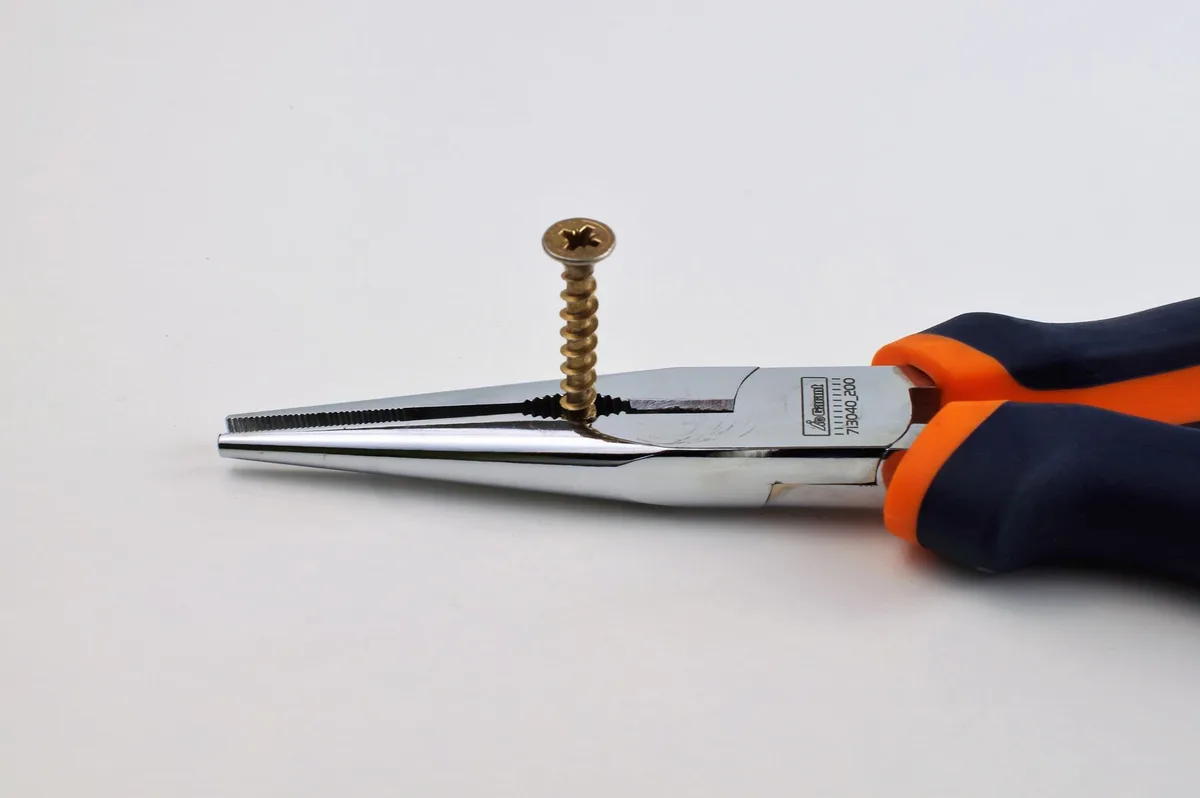
The core idea here is to create a handle for the cork. By screwing a long, coarse-threaded screw into the cork, you create a stable anchor point. Subsequently, using leverage with pliers or a similar tool gripping the screw head, you pull the cork out of the neck.
Step-by-Step: Screwing and Pulling Your Way Out
- Secure the Alcohol: Ensure the bottle is stable and won't tip over during the process.
- Insert the Screw: Take a long, sturdy screw (a wood screw, approximately 1.5 to 2 inches long, works well) and twist it into the center of the cork. Drive it in about halfway to two-thirds of the way, ensuring it has a strong grip.
- Grip the Screw Head: Firmly grasp the head of the screw with a pair of pliers. If you don't have pliers, a hammer claw can sometimes work, but be very careful not to damage the bottle.
- Apply Upward Leverage: Slowly and steadily pull upwards on the pliers. Wiggle the cork gently if it feels stuck, continuing to apply steady pulling force. The screw will act as an anchor, allowing you to extract the cork.
Who It's Best For
This method is excellent for those who have a screw and pliers available. It's particularly advantageous if you want to preserve the integrity of the cork for re-sealing or aesthetic reasons. It offers good control over the extraction process.
Mistakes to Avoid with the Screw-and-Pull
- Using a short or fine-threaded screw: This won't gain enough purchase and might just strip the cork.
- Not screwing deep enough: If the screw isn't in far enough, it could pull out of the cork.
- Using excessive force suddenly: This can cause the cork to crumble or break. The pulling should be gradual.
- Damaging the bottle: Be careful with the pliers or hammer to avoid chipping or cracking the glass bottleneck.
Method 3: The Shoe Method (Use With Caution!)
This is a more unconventional approach, often seen as a trick, and it requires careful execution and ideally a second person to help. The idea is to use the shoe as a buffer and leverage through consistent impact.
How the Shoe Method Works
The principle relies on shock absorption and controlled impact. By placing the bottle neck into a shoe, you create a cushioned surface that can withstand repeated, gentle tapping against a solid object, like a wall. The repeated micro-impacts are designed to gradually work the cork loose and push it outward from the bottle's neck.
Step-by-Step: Tapping Your Way to Wine
- Remove Bottle Foil: Ensure the foil cap is completely removed from the bottle's mouth.
- Position the Bottle: Take a sturdy shoe (sneakers or flat-soled shoes are best) and place the neck of the wine bottle securely into the toe area. You want the cork end facing outwards from the shoe.
- Find a Sturdy Surface: Locate a solid wall or a robust piece of furniture. Avoid anything that could topple or be easily damaged.
- Controlled Tapping: While holding the bottle firmly within the shoe, begin to gently, yet consistently, tap the heel of the shoe against the wall. The impacts should be firm enough to create vibrations but not so forceful as to risk breaking the bottle.
- Monitor Cork Progress: Keep a close eye on the cork. As it begins to emerge from the bottle, reduce the force of your taps and stop completely when it's sufficiently out. You can then usually pull it the rest of the way by hand.
Who It's Best For
This method is suitable if you have a suitable shoe and ideally a helper to stabilize the bottle or catch it as the cork emerges. It's a last resort when other methods aren't feasible.
Safety Warnings for the Shoe Method
- Bottle Breakage Risk: This method carries the highest risk of breaking the glass bottle. Excessive force is the primary culprit.
- Wine Spillage: As the cork loosens, wine may foam and spill out, especially if the bottle is carbonated.
- Secure Grip is Crucial: Ensure you maintain a firm hold on the bottle throughout the process.
- Appropriate Shoe Selection: Avoid shoes with heels that could shatter or shoes with very rigid soles that offer no cushioning.
Method 4: Gentle Heat (For Stubborn Corks)
While more commonly associated with sparkling wines due to internal pressure, applying gentle heat can sometimes help loosen a stubborn cork on still wines. This method requires extreme caution to avoid thermal shock to the glass.
How Gentle Heat Works
The scientific principle is thermal expansion. When the air trapped in the narrow space between the wine and the cork is heated, it expands. This expansion can create enough outward pressure to help overcome the friction and push the cork partially or fully out of the bottle neck.
Step-by-Step: A Touch of Warmth
- Expose the Neck: Remove the foil cap from the bottle.
- Apply Controlled Heat: Using a lighter or a small, controlled flame source, carefully warm the neck of the bottle, just below the cork. You are not trying to heat the wine itself, but rather the air column above it. Apply heat for only a few seconds at a time.
- Observe and Wait: After briefly applying heat, step back and observe. The expanding air may cause the cork to slowly ease its way out. You might need to wait a minute or two for the effect to become apparent. If it doesn't move, you can repeat the brief heating process.
Who It's Best For
This technique is best considered for very stubborn, tightly fitted corks, and even then, with significant reservation. It's particularly noted in some contexts for helping to loosen champagne corks due to inherent bottle pressure.
Safety Warnings for Using Heat
- Thermal Shock: Rapid or excessive heating of the glass can cause it to crack or shatter. Always apply heat gently and indirectly.
- Flame Control: Never point a flame directly at the cork or the wine. Keep the flame moving around the neck of the bottle.
- Do Not Overheat: The goal is mild expansion of air, not cooking the wine or excessively heating the glass.
- Best for Specific Situations: This method is less common and generally riskier for standard still wines compared to other improvised techniques.
Who It's Best For
Each of these improvised cork removal methods suits different people and situations. The push-through technique, for instance, is best for those who prioritize speed and simplicity, provided they have a sturdy, blunt object like a wooden spoon handle. It's a good choice if the cork's integrity isn't a concern. If you're more concerned with extracting an intact cork, the screw-and-pull method is generally more effective.
This method requires a bit more in terms of tools, specifically, a long screw and pliers, but offers better control and a higher likelihood of saving the cork.
The shoe method, while visually striking, is best reserved for situations where you have a helper and are willing to accept a slightly higher risk of bottle damage for the sake of ingenuity. It’s a social, almost party trick, approach. Lastly, the gentle heat method is niche and requires significant caution; it’s best suited for situations where other options have failed and you understand the risks of thermal stress on glass.
Mistakes to Avoid with the Push-Through
When you opt for pushing the cork directly into the bottle, a few common pitfalls can complicate things. One major mistake is using an object that's too narrow or too weak; if it snaps or bends, you've created more of a mess than you started with. Manufacturer specifications for even basic wooden spoon handles indicate they can withstand significant lateral force but might splinter under sharp, direct impact designed for extraction, so choosing carefully is key. Another error is not completely removing the foil cap.
This can snag the cork, making it harder to push or causing it to crumble.
Applying force erratically is also a problem. Instead of a steady, controlled push, sudden hard jabs can cause the cork to break unevenly or get lodged at an angle. Likewise, not pushing the cork far enough into the bottle can leave it partially blocking the opening, making pouring difficult. Always aim to push it fully inside, allowing for a clean liquid flow.
Mistakes to Avoid with the Screw-and-Pull
The screw-and-pull method, while effective, has its own set of potential missteps. A common error is selecting a screw that's too short or has a shallow thread. For proper grip, research indicates screws of at least 1.5 inches with coarse threads are ideal, as they bite into the cork material better than fine threads. If the screw doesn't get a solid purchase, it can strip the cork material and pull out, leaving you back at square one.
Another mistake is screwing the screw all the way through the cork. You want it to anchor firmly, but passing completely through means you've lost your leverage point and might just push cork fragments into the wine. When gripping with pliers or a hammer claw, ensure you have a secure hold. Slipping can lead to dropped tools or, worse, damage to the bottle lip.
Finally, pulling the cork out too aggressively or in a jerky motion can cause it to break. A slow, steady upward pull is what generally works best.
Safety Warnings for the Shoe Method
The shoe method, while seemingly simple, carries distinct safety concerns that demand attention. The primary risk is the potential for the wine bottle to break, especially if it's made of thinner glass or if the impacts are too strong. Aggregate consumer reviews often mention hesitation due to this risk. The shoe acts as a cushion, but it doesn't eliminate the stress on the glass.
It's crucial to use a firm, steady tapping motion rather than violent blows.
Additionally, maintaining a secure grip on the bottle is paramount. If the bottle slips from the shoe during tapping, it could fall and shatter. Having a second person to help stabilize the bottle can significantly reduce this risk. Be mindful of where you are tapping; a solid wall is better than drywall.
When the cork finally dislodges, wine can sometimes surge out, so be prepared for potential spillage.
Safety Warnings for Using Heat
Using heat to remove a cork, even gently, is perhaps the most potentially hazardous improvised method and requires significant caution. The glass of a wine bottle is designed to withstand certain temperature changes but is susceptible to thermal shock if heated too quickly or unevenly. Applying a direct flame from a lighter or torch for too long can stress the glass, leading to cracks or complete breakage. Manufacturer guidelines for borosilicate glass, common in some beverage containers, often warn against rapid temperature differentials exceeding 50 degrees Celsius.
The aim is to warm the air column just above the wine, not to heat the liquid or the glass to extreme temperatures. Overheating can also alter the wine's flavor. Always keep the flame moving and apply heat for very short durations, allowing the glass to cool slightly between applications if needed. This method is best avoided if you have any doubts about your ability to control the heat precisely.
