


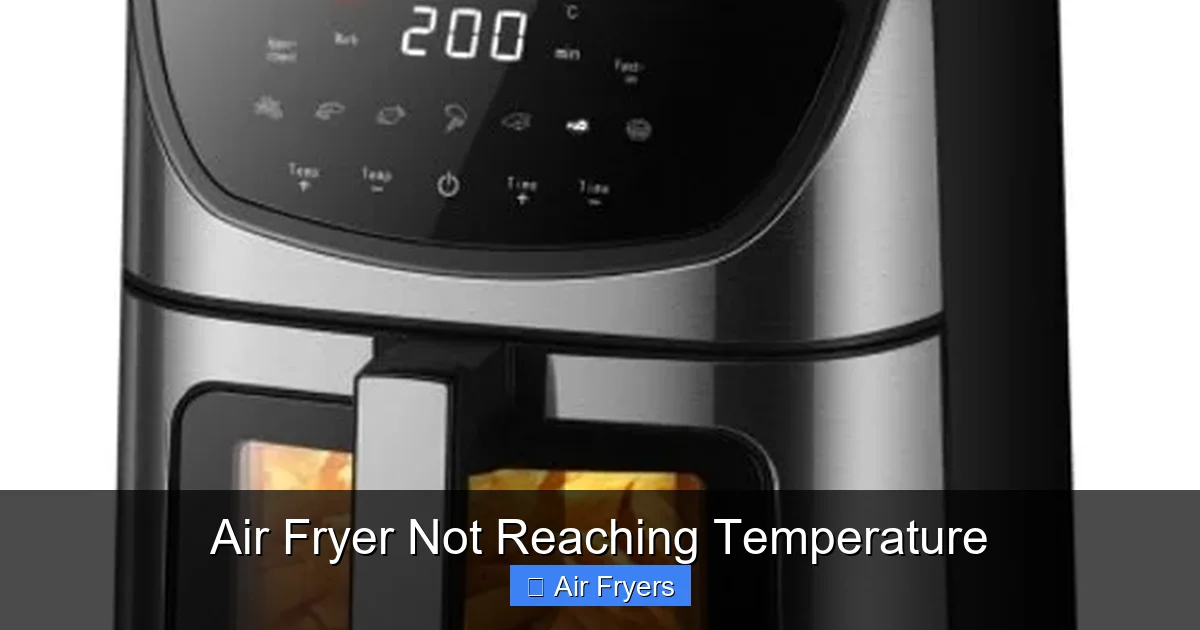
Your air fryer not reaching temperature can ruin perfectly cooked meals. This issue often stems from simple problems like incorrect settings, blocked vents, or worn-out heating elements. With a few quick checks, you can restore your air fryer’s performance and enjoy crispy, evenly cooked food again.
Key Takeaways
- Check the power connection: An unplugged or loose outlet can prevent your air fryer not reaching temperature from functioning properly.
- Inspect heating elements: Over time, grime buildup or damage can reduce heat output significantly.
- Ensure proper ventilation: Blocked intake or exhaust vents restrict airflow and cooling, affecting performance.
- Use correct rack positions: Placing food too close to the heating element can cause uneven heating and lower effective temperatures.
- Avoid overloading the basket: Dense batches block hot air circulation, making it seem like the air fryer not reaching temperature.
- Reset or update firmware: Some digital models may need a factory reset to fix software glitches affecting temperature control.
- Consider professional repair: If basic troubleshooting fails, internal components may need expert attention.
📑 Table of Contents
Why Is Your Air Fryer Not Reaching Temperature?
If you’ve ever opened your air fryer expecting golden, crispy fries only to find soggy, undercooked results, you’re not alone. A common frustration many home cooks face is when their air fryer not reaching temperature—despite setting it to the right dial or screen. It’s like the machine is lying to you: “400°F” says the display, but nothing bakes or browns properly. This problem can turn meal prep into a guessing game and leave you wondering if your appliance has given up.
Air fryers work by circulating superheated air around food using a powerful fan and heating element. When either of these components isn’t working as it should, the whole system falters. The good news? In most cases, an air fryer not reaching temperature isn’t a sign of a broken appliance—it’s often fixable with a little investigation and care.
Let’s walk through everything you need to know about diagnosing and fixing this issue so you can get back to making delicious, perfectly cooked meals.
Troubleshooting an Air Fryer That Won’t Heat Up
Before we dive into solutions, let’s quickly go over the basics of how an air fryer heats food. Modern air fryers use a combination of convection heating and rapid air circulation. The heating element warms the air, and a high-speed fan blows it over the food. This process allows food to cook quickly and evenly without much oil.
When the air fryer not reaching temperature, one or more parts of this system may be failing. Below are the most likely culprits and how to check them.
1. Verify Power Supply and Connections
Sometimes, the simplest explanation is the most overlooked. Before assuming a mechanical fault, make sure your air fryer is getting power.
– Check that it’s plugged in securely.
– Test the outlet with another device to confirm it’s working.
– If using a power strip or extension cord, try plugging directly into a wall socket.
Even a slightly loose connection can cause inconsistent heating or no heat at all. Also, inspect the power cord for fraying or damage—this could explain why your air fryer not reaching temperature even when turned on.
2. Clean the Heating Element and Interior
Over time, crumbs, grease, and food particles can accumulate near the heating element or inside the basket. This buildup acts like insulation, trapping heat instead of allowing it to flow freely. In extreme cases, it can even short-circuit delicate components.
To clean:
– Unplug the air fryer and let it cool completely.
– Wipe down the interior with a damp cloth.
– Use a soft brush or toothbrush to gently remove debris from around the heating coils.
– Avoid submerging any part in water unless it’s explicitly labeled dishwasher-safe.
Regular cleaning prevents long-term damage and ensures consistent heat distribution.
3. Inspect Airflow Vents
Your air fryer needs room to breathe. If the intake or exhaust vents are blocked—by dust, furniture, or other appliances—the fan can’t draw in or expel air efficiently. This restricts airflow and reduces heating efficiency.
Make sure:
– The sides and back of the unit have at least 6 inches of clearance.
– The vent holes aren’t clogged with lint or debris.
– You’re not running the air fryer in a small, enclosed space like a cabinet.
Proper airflow isn’t just about temperature—it also helps prevent overheating, which can trigger safety shutoffs.
Common Causes of Low Air Fryer Temperature
Now that we’ve covered basic checks, let’s explore deeper causes behind persistent heating issues.
Faulty Thermostat or Temperature Sensor
Inside every air fryer is a thermostat or temperature sensor that tells the machine when to turn off the heating element. If this sensor malfunctions, the fryer might stop heating prematurely or fail to reach the set temperature.
Symptoms include:
– Display shows correct temp, but food doesn’t cook.
– Fryer cycles on and off rapidly (thermal runaway).
– Food cooks slowly despite high settings.
This is harder to fix yourself. Contact the manufacturer or consider replacing the unit if it’s out of warranty.
Worn-Out Heating Element
The heating element is the heart of your air fryer. Like any component exposed to high heat repeatedly, it can degrade over time. Signs of failure include:
– Visible dark spots or breaks on the coil.
– Uneven heating zones.
– Persistent low temps even after cleaning.
While some models allow element replacement, others require full unit disposal due to sealed construction.
Malfunctioning Control Board or Digital Display
Modern air fryers rely on electronic controls. If the control board is damaged or the display is faulty, it may show accurate temps while actually delivering none—or vice versa.
Try this test: Place a kitchen thermometer inside the fryer during preheat. Compare its reading to the display. If there’s a big mismatch, the problem is likely internal electronics.
How to Fix an Air Fryer That Won’t Reach Temperature
Most heating issues stem from user-related factors rather than hardware failure. Here’s how to tackle them step by step.
Step-by-Step Diagnostic Checklist
Follow this checklist to pinpoint the issue:
1. **Unplug and inspect** the power cord and plug.
2. **Test the outlet** with another appliance.
3. **Clean thoroughly**, especially around vents and heating coils.
4. **Check rack placement**—make sure it’s fully inserted and not touching the bottom.
5. **Preheat correctly**—some models need 3–5 minutes before food goes in.
6. **Avoid overcrowding**—leave space between items for air flow.
7. **Reset the unit**—unplug for 5 minutes, then restart.
After each step, reheat and observe. This methodical approach saves time and prevents unnecessary repairs.
Practical Tips for Better Performance
Even if your air fryer not reaching temperature issue resolves, these habits will keep it running smoothly:
– **Preheat always**: Especially for meats and baked goods.
– **Rotate food halfway**: Ensures even cooking.
– **Use oven mitts**: Prevents burns and accidental spills near hot surfaces.
– **Store properly**: Keep in a dry place away from humidity.
These small actions extend lifespan and improve reliability.
When to Replace Your Air Fryer
If your air fryer still won’t reach temperature after thorough troubleshooting, it may be time to upgrade. Consider replacing it if:
– The warranty has expired and repairs cost more than 50% of a new model.
– Multiple components are failing (element, sensor, control board).
– You’re investing in better kitchen tools—like those found in our Top Rated Air Fryers guide.
Newer models offer improved temperature accuracy, faster preheats, and smarter controls. For families, choosing the right size matters too—check out our guide on What Size Air Fryer For A Family Of 4 In Litres to avoid capacity issues.
And if you’re budget-conscious, don’t overlook great options under $100—our Best Air Fryer Under 100 article lists reliable picks without sacrificing performance.
Preventative Maintenance for Long-Term Reliability
Prevention beats repair every time. Follow these maintenance tips to keep your air fryer heating consistently:
– **Clean weekly**: Remove crumbs and wipe surfaces.
– **Deep clean monthly**: Disassemble removable parts and wash in warm, soapy water.
– **Check seals**: Ensure door or basket gaskets aren’t cracked.
– **Update firmware**: If applicable, install manufacturer updates via USB or app.
– **Store safely**: Never cover vents or place near heat sources.
A well-maintained air fryer lasts years and delivers dependable results.
Frequently Asked Questions
Why does my air fryer show the correct temperature but still not heat?
This usually indicates a faulty thermostat or heating element. The display may read accurately while the internal components fail to generate heat. Try testing with an external thermometer and contact support if the issue persists.
Can a dirty air fryer affect temperature?
Yes. Grease and food debris buildup insulate the heating element and block airflow, reducing efficiency. Regular cleaning restores optimal performance and prevents long-term damage.
Should I replace my air fryer if it won’t heat?
Not always. Start with troubleshooting steps like checking power, cleaning, and ensuring proper ventilation. If problems continue, evaluate repair costs versus buying a new model—especially if it’s older or frequently used.
How do I know if my air fryer’s heating element is broken?
Look for visible damage like blackened spots or gaps in the coil. You can also test by running the unit empty—if it heats normally, the issue may lie elsewhere, such as the fan or control board.
Does preheating help with temperature accuracy?
Absolutely. Many air fryers need 3–5 minutes to stabilize heat. Skipping preheat leads to inconsistent cooking and can give the impression the air fryer not reaching temperature when it actually is.
Can I repair my air fryer myself?
Simple fixes like cleaning or resetting are safe DIY tasks. However, opening internal components risks voiding warranties or causing injury. For complex electrical issues, consult a technician or the manufacturer.
