


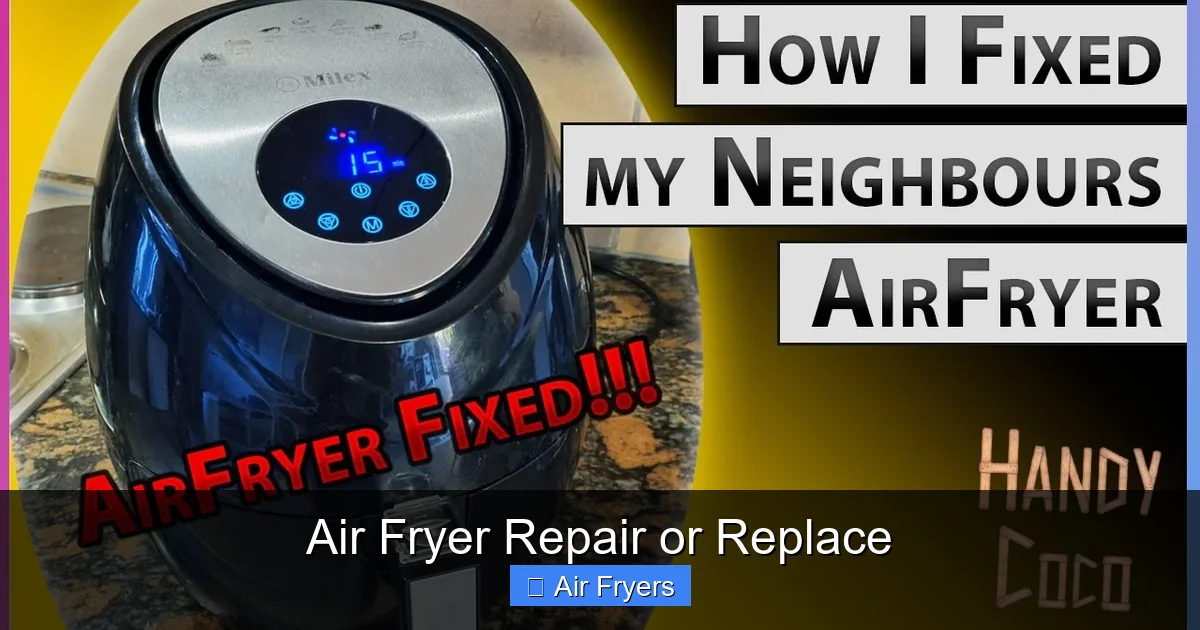
When your air fryer stops working, the big question is: fix it or toss it? This article walks you through the key signs it’s time to repair, how much it might cost, and when replacing makes more sense financially and environmentally. You’ll learn practical tips to extend your appliance’s life and make smart decisions based on your budget, model, and cooking habits.
If your air fryer suddenly won’t heat up, makes weird noises, or just isn’t cooking like it used to, you’re probably wondering: should I try repairing it or just bite the bullet and replace it? The answer isn’t always obvious, especially when emotions run high after investing in a kitchen gadget you love. After all, air fryers have become household staples for healthy frying, roasting, and reheating—but like any appliance, they wear out over time. Deciding whether to repair or replace your air fryer comes down to several factors: how much it costs, how long it’s been in use, what exactly is broken, and whether you’re ready for an upgrade anyway.
This guide walks you through everything you need to know about air fryer repair or replace decisions. We’ll cover common failure points, DIY troubleshooting steps, professional repair options, and clear signs that it’s smarter—and sometimes kinder to the planet—to start fresh. Whether you’re deep into meal prep or just trying to save a few bucks, this article gives you the tools to make a confident choice.
Key Takeaways
- Common air fryer problems: Most issues stem from heating elements, non-stick coatings, or control panels—not the motor or fan.
- Repair vs. replace depends on cost: If repairs exceed 50% of a new model’s price, replacement usually wins.
- DIY fixes can save money: Simple tasks like cleaning heating coils or replacing seals are often doable at home.
- Warranty matters: Check if your warranty covers repairs before paying out-of-pocket.
- Sustainability counts: Repairing extends your appliance’s life, reducing electronic waste.
- Signs it’s time to replace: Persistent overheating, burnt smells, or frequent breakdowns signal end-of-life.
- Energy efficiency drops: Older models use more power; newer ones offer better performance and safety features.
📑 Table of Contents
How Long Do Air Fryers Last?
Most quality air fryers last between three and seven years with regular use. That lifespan depends heavily on maintenance, frequency of use, and how well the manufacturer built the unit. For example, models from trusted brands like Ninja, Instant Pot, or Cosori often outlast cheaper alternatives because they use durable components and come with solid warranties. But even great appliances eventually show their age.
Think of your air fryer like a car—it needs routine care to keep running smoothly. Neglecting simple cleaning tasks can shorten its life significantly. Over time, grease builds up inside, heating elements lose efficiency, and seals dry out or crack. These aren’t catastrophic failures; they’re gradual wear-and-tear issues that add up. If your air fryer is nearing the end of its expected life (say, five years or more), then even minor repairs might not be worth the investment.
On the flip side, if your air fryer is only two or three years old and something goes wrong, chances are good that repairing it will extend its usefulness for years to come. It’s all about context.
Common Air Fryer Problems and Their Causes
Understanding what typically breaks down helps you assess whether fixing makes sense. Unlike blenders or mixers, most air fryer failures involve the heating system, surface materials, or user controls—not moving parts prone to mechanical failure.
1. Not Heating Properly
This is the #1 complaint. If your food comes out soggy instead of crispy, the heating element may be failing. Sometimes, it’s as simple as crumbs or grease blocking airflow around the coil. Other times, the thermostat has gone bad and can’t regulate temperature accurately. In rare cases, the main heating circuit board needs replacement.
2. Burnt Smell or Smoke
A burning odor usually means food debris has accumulated near the heating element. This happens when splatters aren’t wiped down after each use. While alarming at first, it’s often fixable by deep-cleaning the interior and ensuring no residue remains close to the coil. If the smell persists after thorough cleaning, the insulation around the heater may be degrading.
3. Non-Stick Coating Peeling
Over time, repeated exposure to high heat and scrubbing with abrasive tools wears away the non-stick layer. Once peeling starts, bacteria can hide in tiny cracks, and toxic fumes may release during cooking. At this point, replacing the basket is often cheaper than buying a whole new unit—but only if the rest of the air fryer works fine.
4. Control Panel Malfunctions
Buttons unresponsive, timers not counting down, or displays flickering? These issues usually stem from loose wiring, moisture damage, or internal software glitches. Many modern air fryers have sealed controls, but older models are more vulnerable. Sometimes, reseating connectors or drying the panel thoroughly solves the problem.
5. Loud or Irregular Fan Noise
The fan circulates hot air for crispiness. If it spins erratically or sounds like grinding, the bearings may be worn out. Unfortunately, fans are rarely serviceable, so replacement often means buying a new unit unless you’re handy with electronics.
When Is Repair Worth It?
Repairing your air fryer is usually smart if:
– The appliance is less than four years old.
– The repair cost is under half the price of a comparable new model.
– Your unit still performs well otherwise (just one or two minor flaws).
– You enjoy using it regularly and don’t want to disrupt your cooking routine.
For instance, if your heating element fails and a replacement part costs $25–$40, while a basic new air fryer runs $70–$90, repairing saves money and keeps your favorite tool alive. Plus, you avoid the hassle of returning, unboxing, and recalibrating a new machine.
Also consider environmental impact. Throwing away a functional appliance contributes to e-waste. Repairing aligns with sustainable living—especially since many air fryers contain valuable metals and plastics that take centuries to decompose.
When Should You Replace Instead?
There are clear red flags signaling it’s time to replace your air fryer:
– **Persistent issues after multiple repair attempts** – If you’ve fixed the same problem twice, the root cause may be deeper.
– **High energy bills** – Old units consume more electricity due to outdated heating tech.
– **Safety hazards** – Smoke, sparks, or exposed wires mean immediate replacement is necessary.
– **Outdated features** – Newer models offer digital timers, preset programs, faster preheat, and better temperature precision.
– **Cost-prohibitive repairs** – If fixing exceeds $60–$80 for a mid-range model, go new.
Another factor is compatibility. Maybe your current air fryer doesn’t fit your lifestyle anymore. Are you cooking for more people now? Then upgrading to a larger capacity (like our guide on Best Air Fryer for Large Families) could be ideal. Or perhaps you crave faster meals—check out top picks for quick-cooking models.
DIY vs. Professional Repair: What’s Best?
Many minor air fryer issues are easy to tackle yourself. Here’s how:
– **Clean the heating element**: Unplug the unit, remove the basket and tray, then gently wipe away carbonized grease with a damp cloth and mild soap. Never spray water directly onto electrical components.
– **Replace the basket gasket**: Over time, rubber seals harden and leak hot air. Replacement rings are cheap and sold online by brand-specific suppliers.
– **Reset the control board**: Some models have a small reset button behind the power cord slot. Press it with a paperclip for 10 seconds—this often resolves software freezes.
However, if the issue involves internal wiring, circuit boards, or motor assemblies, DIY risks damaging the unit further or voiding remaining warranty. In those cases, consult the manual or contact customer support. Brands like Ninja and Instant Pot offer authorized repair services, though labor fees can add up.
Pro tip: Keep your receipt and registration info handy. Even expired warranties sometimes honor goodwill repairs if you explain the situation politely.
How Much Does Air Fryer Repair Actually Cost?
Parts alone range from $10 for a basket seal to $60 for a heating element. Add labor ($50–$100 per hour), and total costs vary widely. Compare that to entry-level models starting around $50, mid-range units at $100–$150, and premium versions above $200.
Use this rule of thumb: if total repair costs hit 50% or more of a new equivalent model, replacement wins. Also ask: does the repaired unit include updated safety certifications or energy-saving features? Probably not—newer fryers use induction heating and auto-shutoff tech that older ones lack.
Making the Smart Choice: Repair or Replace?
Ultimately, the decision blends practicality, emotion, and values. If your air fryer brought joy to family dinners and still cooks decently despite quirks, repairing lets you preserve those memories. But if it’s constantly breaking down, uses too much power, or you’ve already invested in a newer kitchen setup, upgrading offers peace of mind.
Before acting, evaluate:
– How often do you use it?
– What’s your budget for a replacement?
– Are there newer features you really want?
– Can you afford downtime while waiting for repairs?
And remember: even if you replace, don’t discard responsibly. Look for e-waste recycling programs—many retailers accept old appliances when you buy new ones.
Whether you choose to repair or replace your air fryer, being informed helps you act wisely. With these insights, you’ll spend less stress and more time enjoying perfectly crispy fries, golden chicken wings, and every delicious bite in between.
Frequently Asked Questions
Can I fix my air fryer myself?
Yes, many common issues like cleaning the heating element or replacing the basket seal are DIY-friendly. Always unplug the unit first and follow safety guidelines. Avoid opening electrical compartments unless you’re comfortable with basic electronics.
Is it worth repairing an old air fryer?
It depends on age and cost. If your air fryer is under four years old and repairs cost less than half the price of a new model, fixing it usually saves money and reduces waste. However, if it’s frequently breaking down or outdated, replacement may be better.
How do I know if my air fryer’s heating element is broken?
If food isn’t getting crispy, the unit feels cool to the touch, or you hear unusual clicking sounds, the heating element may be faulty. Try testing it with a multimeter (if you’re handy) or compare performance to past results. Persistent issues after cleaning suggest hardware failure.
What should I do if my air fryer smokes?
Immediately unplug it and let it cool. Wipe away any visible debris near the heating coil. If smoke returns after thorough cleaning, stop using it—the insulation may be damaged. This is a fire risk, so replacement is safest.
Are refurbished air fryers reliable?
Yes, many reputable retailers sell refurbished models tested and certified by professionals. They often come with extended warranties and are priced lower than new units. Just ensure the return policy is clear before purchasing.
How can I extend my air fryer’s lifespan?
Clean it after every use, avoid high heat for delicate foods like fish, never immerse the base in water, and store it with the basket removed to prevent seal hardening. Regular maintenance prevents most common failures.
